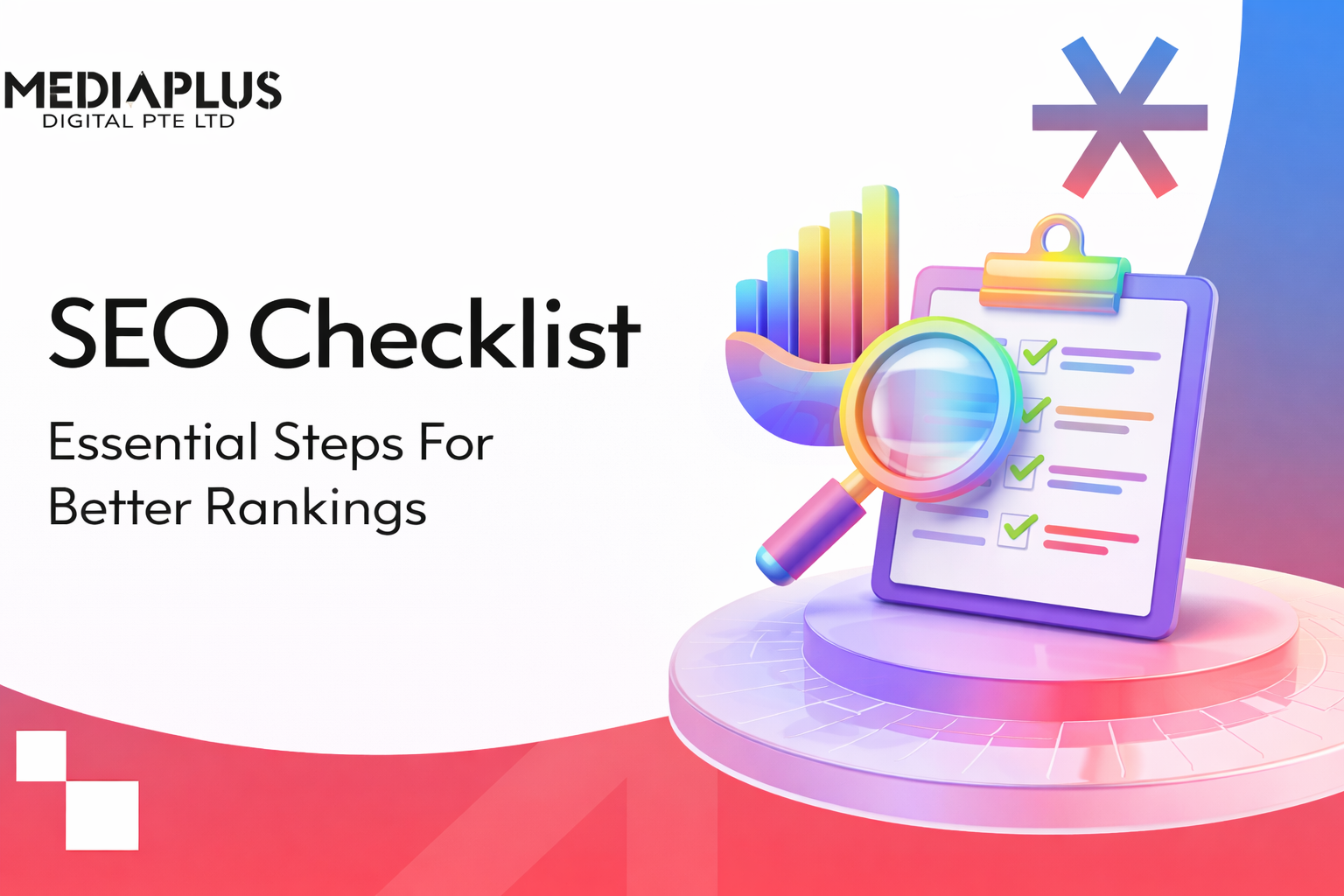
This SEO checklist is designed to help you build a strong, sustainable SEO foundation. It covers the full scope of modern SEO, from technical setup and keyword research to content quality, links, and AI-driven search visibility.
You do not need to implement every item at once. Start with the sections most relevant to your current situation, then expand over time.
I. SEO Basics Checklist (Foundation)
1. Set up Google Search Console
Google Search Console is essential for understanding how your site performs in search.
Make sure you:
-
Verify your domain properly
-
Submit your XML sitemap
-
Monitor indexing, coverage, and Core Web Vitals
-
Track queries, impressions, clicks, and average position
If Google cannot crawl or index your pages correctly, nothing else in this checklist will matter.

2. Set up Bing Webmaster Tools
While Google dominates, Bing still drives meaningful traffic in many markets.
Bing Webmaster Tools provides:
-
Additional keyword data
-
Crawl and index insights
-
Backlink information
More data means better decisions.
3. Set up GA4 and connect it with Search Console
Google Analytics 4 helps you understand what users do after they land on your site.
You should:
-
Track organic traffic by landing page
-
Monitor engagement rate and conversions
-
Connect GA4 with Search Console for SEO insights inside analytics
SEO success is not just traffic. It’s traffic that engages and converts.
4. Install and configure an SEO plugin (if applicable)
For WordPress or Shopify, SEO plugins help manage:
-
Title tags and meta descriptions
-
XML sitemaps
-
Robots.txt
-
Basic schema
These tools don’t replace strategy, but they prevent common technical mistakes.
5. Define SEO KPIs clearly
Before optimizing, decide what success looks like.
Common SEO KPIs include:
-
Organic traffic growth
-
Keyword rankings (especially commercial terms)
-
Organic conversions or assisted conversions
-
Backlink growth and quality
-
Page experience metrics (speed, engagement)
Clear KPIs keep SEO aligned with business outcomes.
II. Keyword Research Checklist
6. Identify your target audience and search intent
Before finding keywords, understand:
-
Who your ideal users are
-
What problems they are trying to solve
-
Whether their intent is informational, commercial, or transactional
SEO works best when content matches intent, not just keywords.
7. Discover long-tail keywords
Use:
-
Google autocomplete
-
“People Also Ask”
-
Forums, Reddit, Quora, niche communities
Long-tail keywords:
-
Are easier to rank for
-
Convert better
-
Reveal real user language
8. Use keyword research tools to validate demand
Tools like Semrush help you evaluate:
-
Search volume
-
Keyword difficulty
-
Trends
-
SERP features
Balance opportunity with realism. Not every high-volume keyword is worth chasing.
9. Find question-based keywords
Question keywords are ideal for:
-
Blog posts
-
FAQ sections
-
Featured snippets
-
AI search results
They align naturally with how people search and how AI answers queries.
10. Build topical authority
Instead of targeting isolated keywords, build clusters around core topics.
This means:
-
One main pillar page
-
Multiple supporting articles that interlink
-
Clear topical coverage
Topical authority improves rankings across an entire subject, not just one page.
III. On-Page SEO Checklist
11. Optimize URLs
-
Keep URLs short
-
Include the main keyword
-
Use hyphens, not underscores
-
Avoid unnecessary parameters
Clear URLs improve both SEO and click-through rate.
12. Optimize title tags
Best practices:
-
Front-load the primary keyword
-
Keep titles under ~60 characters
-
Use modifiers like “guide”, “checklist”, or the current year
-
Write for humans first, not just algorithms
13. Use keywords early in content
Mention the primary keyword:
-
In the first 100–150 words
-
In H1 and relevant H2s
This helps search engines and users quickly understand relevance.
14. Optimize images
For every image:
-
Use descriptive filenames
-
Add meaningful alt text
-
Compress images for speed
Image optimization improves accessibility and can drive image search traffic.
15. Use internal and external links properly
-
Link to relevant internal pages using descriptive anchor text
-
Link out to authoritative sources where helpful
Internal links distribute authority. External links add context and credibility.
IV. Content Quality Checklist
16. Create scannable content
Most users scan, not read.
Use:
-
Short paragraphs
-
Clear headings
-
Bullet points
-
Visual breaks
Good structure improves engagement and rankings.
17. Focus on information gain
Don’t just rewrite what already ranks.
Add:
-
Original insights
-
Real examples
-
Case studies
-
Data or experience others don’t have
Google rewards content that adds new value.
18. Use multimedia
Enhance content with:
-
Images
-
Charts
-
Videos
-
Infographics
Multimedia improves user experience and time on page.

V. Technical SEO Checklist
19. Ensure pages are crawlable and indexable
Check for:
-
Noindex tags
-
Robots.txt issues
-
Canonical errors
Fix these issues first before worrying about rankings.
20. Optimize for Core Web Vitals
Focus on:
-
LCP (under 2.5s)
-
INP (fast interaction)
-
CLS (minimal layout shift)
Page speed affects rankings and conversions.
21. Make your site mobile-friendly
Google uses mobile-first indexing.
Ensure:
-
Responsive design
-
Readable text
-
Clickable buttons
-
No intrusive popups
22. Fix broken links and redirect issues
-
Repair 404 errors
-
Avoid redirect chains
-
Use 301 redirects for permanent changes
Technical cleanliness protects SEO equity.
23. Use structured data where relevant
Schema helps search engines understand content and can unlock rich results.
Use schema for:
-
Reviews
-
Products
-
FAQs
-
Articles
VI. Link Building & Off-Page SEO Checklist
24. Analyze competitor backlinks
See where competitors earn links and identify realistic opportunities.
25. Build links through value, not spam
Effective methods include:
-
Digital PR
-
Expert quotes
-
Case studies
-
Guest contributions
-
Resource link building
Quality matters more than quantity.
26. Turn brand mentions into links
If sites mention your brand without linking, reach out politely and request a link.
VII. AI SEO & Future-Proofing Checklist
27. Identify where your audience uses AI search
Users may rely on:
-
Google AI Overviews
-
ChatGPT
-
Perplexity
-
Gemini
You don’t need to optimize for everything. Start with the most relevant platforms.
28. Track AI visibility and sentiment
Monitor:
-
Whether your brand is mentioned
-
How it is described
-
Which sources AI tools cite
AI SEO is about visibility and perception.
29. Create AI-friendly answer pages
Build pages that:
-
Answer questions clearly
-
Use structured headings
-
Include concise summaries
-
Support claims with data
These pages are easier for AI models to quote.
Final Thoughts
SEO is not a single tactic or a one-time project. It is a system.
When technical foundations are solid, keyword strategy is aligned with real search intent, content genuinely adds value, backlinks are earned from credible sources, and AI visibility is actively monitored, organic growth becomes far more predictable and scalable. Each element supports the others. Weakness in one area eventually limits the entire system.
That is why effective SEO today requires both consistency and adaptation. Search algorithms change. User behavior evolves. AI-powered search experiences are reshaping how brands are discovered and referenced. Treating an SEO checklist as a living framework, not a static document, is key to staying competitive.
For businesses that want to move beyond basic optimization, working with an experienced partner can accelerate results. MediaPlus Digital Malaysia provides full-funnel SEO services, covering technical SEO, content strategy, on-page optimization, and link acquisition, all grounded in measurable performance.
In addition, their AI SEO services help brands improve visibility across AI-driven search surfaces such as Google AI Overviews and large language models. This includes AI visibility tracking, prompt-based content optimization, brand perception monitoring, and the creation of AI-friendly answer hubs that are more likely to be cited and summarized by modern search tools.
Whether you manage SEO in-house or with an agency, the key takeaway is simple: SEO works best as an integrated, long-term system. Revisit this checklist regularly, adapt it as search evolves, and focus on building real authority that both search engines and AI systems can trust.