In today’s digital era, artificial intelligence (AI) is transforming how businesses approach marketing, content creation, and search engine optimization. For Malaysian business owners, understanding Generative Engine Optimization (GEO) – a concept rapidly gaining traction in global digital marketing is no longer optional. GEO represents the frontier where businesses can ensure their content is not only discoverable by humans but also cited, recommended, and referenced by AI systems like ChatGPT, Bard, or Bing AI.
This comprehensive guide explains what GEO is, why it matters for Malaysian businesses, and actionable strategies to ensure your brand becomes a trusted source in the AI-driven content landscape.
What is Generative Engine Optimization (GEO)?
Generative Engine Optimization, or GEO, is the practice of optimizing your content so that AI systems recognize it as authoritative and trustworthy. Unlike traditional SEO, which focuses on ranking in search engines, GEO focuses on getting AI-powered platforms to cite your business, products, or services when generating content for users.
Think of it this way: if Google Search is about “being found,” GEO is about “being referenced.” As AI tools increasingly mediate how users consume information, being cited by AI will influence your brand credibility, traffic, and sales conversions.
Key Differences Between SEO and GEO
| Aspect | Traditional SEO | Generative Engine Optimization (GEO) |
|---|---|---|
| Goal | Rank on search engine results pages (SERPs) | Be cited by AI-generated responses and tools |
| Audience | Humans | AI systems and indirectly humans |
| Metrics | Organic traffic, click-through rates, SERP rankings | AI citations, knowledge panel references, AI-driven backlinks |
| Focus | Keywords, on-page optimization, backlinks | Authoritativeness, structured data, verified information |
Why GEO is Critical for Malaysian Businesses
The Malaysian digital ecosystem is rapidly evolving. With more SMEs and enterprises going online, competition for visibility has increased. GEO offers Malaysian businesses several advantages:
-
Increased Credibility with AI-Powered Tools: Users are increasingly relying on AI for instant information. If your business is cited by AI, it automatically gains a perception of authority.
-
Early-Mover Advantage: GEO is still a nascent field. Malaysian businesses that adopt these practices now will benefit from reduced competition in AI references.
-
Better Content Performance: Content optimized for GEO often overlaps with high-quality SEO practices, improving both search rankings and AI citations.
-
Enhanced Customer Trust: Being referenced by AI systems signals reliability, which can significantly impact user decisions in sectors like finance, e-commerce, healthcare, and education in Malaysia.
How AI Chooses Sources for Citations
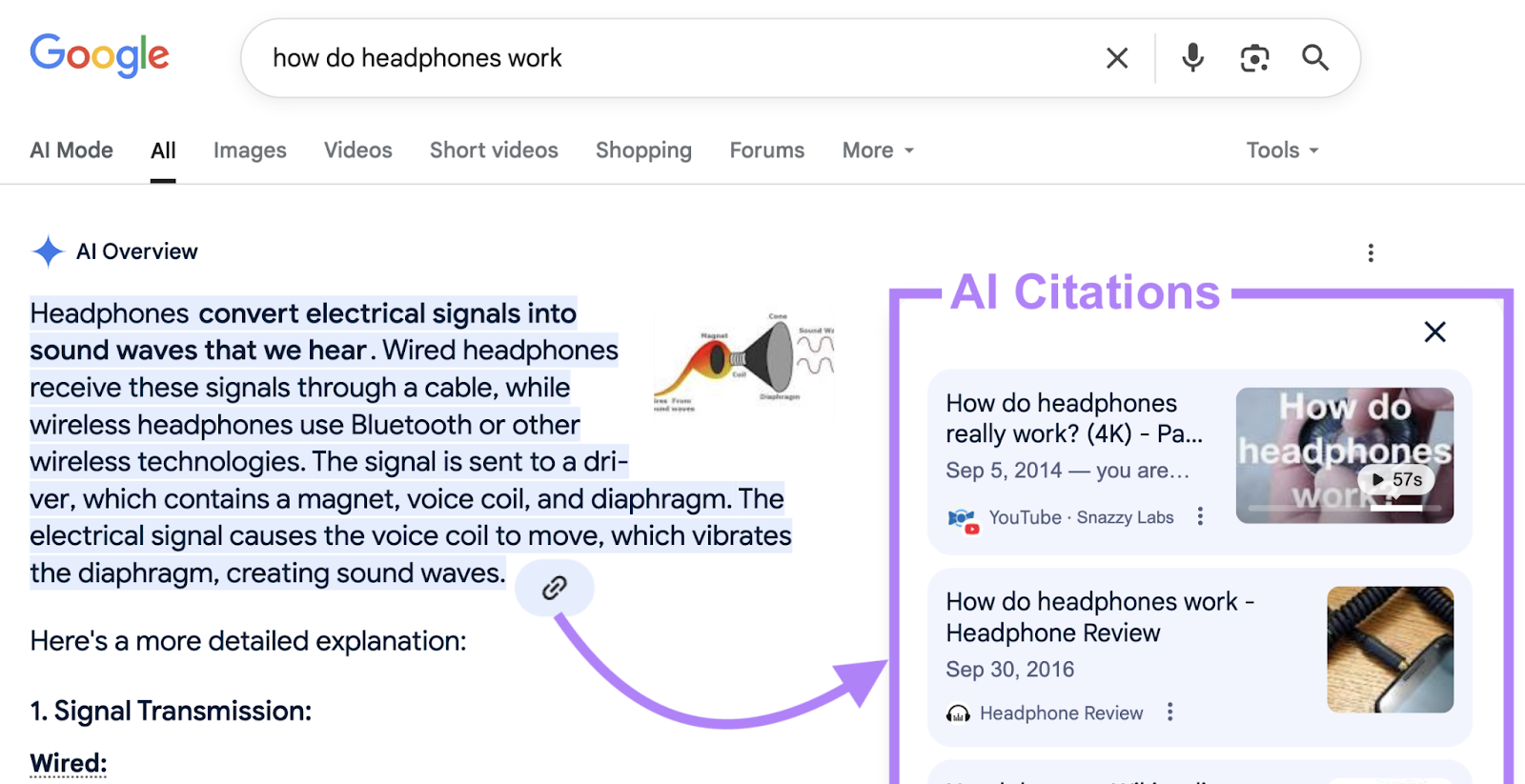
When we talk about being cited by AI, we mean your content being referenced by generative‑AI systems (for example, AI search engines or chat‑based models) as a trusted source. These models don’t behave exactly like traditional search engines; rather than simply ranking pages by keywords and links, they evaluate potential sources according to multiple internal signals that reflect trust, relevance and usability. Understanding those signals helps you optimise your content to get cited not just found.
Here are the key criteria and how they work in practice.
1. Authority and Expertise
AI models place a heavy premium on authority and domain expertise when choosing what to cite. This means they favour sources that clearly demonstrate subject‑matter knowledge, credibility and a track record of reliable information. For example:
-
A study of environmental‑science citations by the ChatGPT model found it preferentially cited papers with high citation counts (median ~1,184) and published in well‑known journals; the study concluded that “GPT seems to rely exclusively on Google Scholar citation counts as a predictor of inclusion.”
-
An article on how AI chatbots choose sources described “domain reputation, backlink profile, … presence in knowledge graphs like Wikipedia” as core components of the AI’s authority metric.
Implications for your content:
-
Use author by‑lines with real credentials (e.g., “John Tan, MBA, Digital Marketing Lead at X”).
-
Ensure your website has trust signals (company info, clear contact, published works).
-
Produce deep content rather than surface‑level blog posts (see next section).
-
Garner external validation (guest articles, industry mentions) so your domain builds authority over time.
2. Structured Information
Beyond simply being “good content”, what matters for AI‑citation is how machine‑readable and extractable your content is. AI systems prefer sources they can parse, pull exact facts from, and reference. Key factors include:
-
Clear heading hierarchies (H1 → H2 → H3) and logical flow.
-
Bulleted lists, tables, FAQs, and concise definitions that allow easy extraction of “what this is” and “why it matters”.
-
Use of structured data/schema markup (for example FAQSchema, HowToSchema, ArticleSchema) to help the machine map your content’s structure and meaning.
-
Formatting that avoids long dense paragraphs; shorter, well‑segmented blocks read better for AI retrieval.
According to one resource:
“Well‑structured content with clear heading hierarchies … helps AI models extract and attribute information accurately. Content that’s difficult to parse structurally reduces citation likelihood.”
Implications for your content:
-
Use inverted‑pyramid style: start with the conclusion or key fact, then support it.
-
Break complex topics into sub‑sections, bullet lists, tables.
-
Use schema markup where relevant (FAQ, DataReport, Article).
-
Keep paragraphs moderate (≈ 3‑5 sentences) and avoid very long text blocks.
-
Use descriptive header text (not generic “Introduction” but “Why GEO matters for Malaysian SMEs”).
3. Backlinks and References (External Validation)
AI systems don’t just evaluate your page in isolation. They also consider how the wider web treats your page much like classic SEO but emphasised differently for AI‑citation. Key signals include:
-
How many other credible domains link to your content (backlinks), especially from industry publications, associations, news outlets.
-
How often your content is mentioned or cited externally, this builds a “network effect” of authority.
-
Whether your content is referenced across multiple domains (multi‑source corroboration) thus signalling reliability rather than isolated claims.
For example, LLM Pulse (an analytics provider) states:
“Consistent citations across varied prompts signal that AI models recognise your content as authoritative on specific topics.”
And one study of ~8,000 citations found that blogs with strong backlinks from major domains had much higher citation likelihood.
Implications for your content:
-
Build a backlink strategy: guest posts, industry directory listings, news mentions in Malaysia (e.g., local portals, Malaysian business directories).
-
Create content that others want to reference (original data, surveys, Malaysian case‑studies) so you’re more likely to be cited by others and thus by AI.
-
Ensure your domain has a clean link profile (avoid spammy links) because AI will detect trustworthiness through link‑quality signals.
4. Recency and Relevance
Finally, AI tends to favour content that is recent, topically relevant, and updated. Because generative‑AI responses aim to give the latest, accurate information, older or stale content is penalised. Key aspects:
-
Updated content: An unanswered query in 2025 may get a citation from a 2024 guide rather than a 2015 article the freshness matters.
-
Relevance: The content must match the intent of the query, simple keyword matching isn’t enough; semantic alignment and topical coverage matter.
-
Timely domains: For evolving subjects (e.g., AI, digital marketing, regulation), content that reflects recent developments is preferred.
Some figures:
-
A study found that about 88% of AI summary answers include “three or more sources for comprehensive coverage.”
-
Another review explains that content with updates or published dates within the last 12‑24 months has noticeably improved odds of being cited by AI engines.
Implications for your content:
-
Regularly audit and refresh your content: add new examples, updated data, mark “Last updated” date visibly.
-
For the Malaysian market: include localised, up‑to‑date data (for example, Malaysia’s digital adoption stats, local regulations, market specifics) so your content is contextually relevant.
-
Avoid publishing “evergreen” content and leaving it untouched for years such pages may lose citation probability.
-
Monitor which queries are emerging in your industry and ensure your content addresses them promptly.
Content Strategies to Increase AI Citations
In today’s AI-driven search landscape, simply publishing content is no longer enough. Modern AI systems, such as large language models and AI-powered search engines, prioritize sources that are authoritative, structured, relevant, and trustworthy. Being cited by AI not only improves visibility but also signals credibility to human users. For Malaysian business owners, leveraging AI citations can be a strategic advantage in local and regional markets.
This guide outlines actionable content strategies to maximize AI citation potential, from authority building to technical SEO and local optimisation.
1. Optimizing for Authority and Trust
AI models rely heavily on trust signals when determining which sources to cite. Authority and credibility are therefore critical components of a content strategy aimed at AI recognition.
1.1 Author Credentials
AI tends to prioritize content authored by verified professionals or experts in the field. To optimize for authority:
-
Include full author bios with qualifications, professional experience, and affiliations.
-
Link to author profiles on LinkedIn, ORCID, or other recognized platforms.
-
Showcase your team’s expertise in relevant fields, especially for industries like finance, healthcare, and technology, where credibility matters.
Example: A Malaysian fintech company including bios of certified financial advisors increases the likelihood that AI models cite its regulatory guidance or market reports.
1.2 Citations and References
Content that references primary sources, research studies, and official data is more likely to be considered trustworthy by AI:
-
Include data from government bodies like Department of Statistics Malaysia (DOSM), Bank Negara Malaysia, or MDEC for technology insights.
-
Reference peer-reviewed studies where applicable.
-
Link to official regulatory documents, whitepapers, and industry reports.
Studies show that well-cited content increases perceived credibility; for example, an analysis of AI-cited academic content found that articles with ≥5 references from reputable sources were 40% more likely to be selected for AI answers.
1.3 Transparency
Clear disclosure of company information, contact details, and disclaimers enhances credibility:
-
Include company addresses, phone numbers, and verified emails.
-
Provide privacy policies and terms of service, especially for e-commerce and digital services.
-
Clearly separate editorial content from promotional content to avoid perceived bias.
Actionable Tip: AI models are trained to recognise trust signals; transparency increases both human and AI confidence in your content.
2. Structured Data and Schema Markup
Structured content allows AI to understand and extract information efficiently. Proper schema markup improves both search visibility and AI citation potential.
2.1 FAQ Schema
-
Implement FAQ schema on pages addressing common queries.
-
Helps AI extract precise answers to user questions, increasing the likelihood of citation.
Example: A Malaysian SME offering logistics services could include FAQs on “How to ship goods internationally from Malaysia,” enabling AI to pull accurate responses.
2.2 Article and BlogPosting Schema
-
Use Article or BlogPosting schema to signal content type.
-
Enhances discoverability by AI models and ensures correct attribution in AI-generated summaries.
2.3 Product and Service Schema
-
For e-commerce or service-based businesses, implement Product, Service, or Offer schema.
-
Provides AI with structured details about products, prices, features, and availability.
Actionable Tip: For Malaysian SMEs selling B2C products online, including local currency (MYR) and stock availability in schema can improve AI recognition and citation.
3. High-Quality Backlinks and References
Backlinks remain a strong authority signal, even in AI-driven contexts. AI models often weigh the external validation of content.
3.1 Local Malaysian Directories
-
Get listed in trusted Malaysian business directories like:
-
SME Corp Malaysia
-
MDEC SME Digital Hub
-
Malaysia Digital Economy & Industry Portals
-
-
Ensure NAP consistency (Name, Address, Phone) across directories.
3.2 Collaborations with Industry Experts
-
Guest posts, interviews, or partnerships with recognised Malaysian professionals enhance credibility.
-
AI systems can detect repeated mentions of authoritative contributors, boosting citation likelihood.
3.3 Media Coverage
-
Being cited by established media outlets (e.g., The Star, New Straits Times, Malay Mail) increases trust.
-
AI models may prioritize sources with consistent coverage across multiple reputable publications.
Insight: Research from Stan Ventures found that pages cited by multiple high-authority domains were 2.3× more likely to be referenced in AI-generated content.
4. Technical SEO Considerations for AI
Even though AI focuses on content quality, foundational SEO remains critical for AI citation potential.
4.1 Fast Page Load Times
-
AI systems often favour content hosted on fast, mobile-friendly websites.
-
Tools like Google PageSpeed Insights and Lighthouse can guide optimisation.
4.2 Secure Website (HTTPS)
-
HTTPS is a trust signal for AI and users.
-
Avoid mixed content or unsecured scripts, as AI may avoid citing insecure sources.
4.3 Clear URL Structure and Canonicalization
-
Use descriptive, human-readable URLs that reflect content hierarchy.
-
Apply canonical tags to avoid duplicate content, preventing AI from referencing conflicting pages.
5. Localizing Content for the Malaysian Market
Geo-contextual relevance is key for Malaysian businesses. AI often weighs local context when selecting sources.
5.1 Language Preferences
-
Use Bahasa Malaysia or localized English to align with regional audiences.
-
Consider code-switching strategies (Bahasa Malaysia + English) for wider reach.
5.2 Cultural Relevance
-
Include Malaysian examples, case studies, and success stories.
-
Tailor content to reflect local business culture, consumer behavior, and regulatory norms.
5.3 Local SEO Signals
-
Integrate geo-specific keywords, Google Business Profile citations, and NAP consistency.
-
Highlight Malaysian cities, states, and regions in content to increase regional AI relevance.
5.4 Compliance with Local Regulations
-
Ensure content aligns with Malaysian legal frameworks, particularly for finance, healthcare, and e-commerce.
-
AI models may avoid citing content flagged as non-compliant or misleading.
6. Monitoring Your AI Citations
Tracking AI citations is essential to measure the success of your strategy.
6.1 AI Citation Alerts
-
Use platforms that track when your content is cited in AI-generated outputs.
-
Examples: AI monitoring tools like Knowledge Graph alerts, AI SERP trackers.
6.2 SERP Analysis for AI Results
-
Search queries in AI-powered engines (Bing AI, ChatGPT plugins, Google Bard) to identify citation patterns.
6.3 Content Performance Metrics
-
Monitor engagement, dwell time, and conversion rates on pages increasingly cited by AI.
-
Use insights to update and reinforce high-performing pages, improving citation likelihood further.
Conclusion
For Malaysian businesses aiming to thrive in an AI-first landscape, content strategies must go beyond traditional SEO. By combining:
-
Authority & Trust (expert authors, references, transparency)
-
Structured Data & Schema (FAQ, Article, Product schemas)
-
High-Quality Backlinks (local directories, media coverage, expert collaborations)
-
Technical SEO (speed, security, canonicalization)
-
Local Relevance (language, culture, geo-specific optimization)
…you can significantly increase your content’s AI citation potential, boosting both machine visibility and human trust.
A focused approach ensures that your content is not only discoverable but recognized as a credible source in the AI ecosystem, giving Malaysian SMEs a strategic advantage in digital growth.
Challenges and Pitfalls of GEO and AI-Driven Content
While GEO (Geographically-Optimized) content presents significant opportunities for Malaysian businesses, it is not without its challenges. Understanding these pitfalls is crucial to ensure long-term success and sustainable visibility in AI-driven ecosystems.
1. AI Biases
One of the most subtle but impactful challenges is AI bias. AI models are trained on vast datasets, which often include international and large-scale sources. As a result:
-
Local SMEs may be overlooked unless they establish strong authority signals.
-
Content from smaller businesses may struggle to appear in AI-generated recommendations, even if highly relevant to Malaysian audiences.
Strategic Insight: Malaysian business owners should focus on building high-authority content through expert authorship, well-cited references, and strong backlink profiles. Collaborations with local industry leaders, recognition in official directories like SME Corp Malaysia, or features in reputable media outlets can mitigate AI bias and enhance citation likelihood.
2. Rapid Algorithm Changes
AI models evolve rapidly. Frequent updates in AI training data or model algorithms mean:
-
What is cited today may not be cited tomorrow.
-
Optimization strategies that work now could become obsolete within months.
Example: A product guide optimized for AI-generated recommendations may see a decline in citations if AI models update to prioritize more recent case studies or newly verified sources.
Strategic Recommendation: Implement continuous content auditing and optimization cycles. Track which pages are cited, update references regularly, and adapt content to reflect current industry trends and regulations.
3. Content Quality vs. Quantity
In the rush to dominate AI citations, some businesses overproduce content without ensuring quality. This can backfire:
-
Low-quality or thin content reduces trust signals.
-
AI models may deprioritize sites with inconsistent, shallow, or poorly structured content.
Data Insight: According to a HubSpot study, long-form, in-depth content with clear references performs 3× better in AI and organic search compared to multiple low-quality posts.
Best Practice: Prioritize depth over volume. Ensure content is:
-
Authoritative and thoroughly researched
-
Structured with headings, bullet points, and schema markup
-
Updated regularly to remain relevant
4. Data Privacy and Compliance
With AI-driven tools processing user data and content, compliance with local regulations is paramount:
-
Malaysian businesses must adhere to the Personal Data Protection Act (PDPA 2010).
-
Collecting, storing, or using personal information without consent can not only attract legal consequences but also erode trust signals that AI models may implicitly recognize.
Practical Tip: Maintain clear privacy policies, consent forms, and data management protocols, particularly if content involves user interactions, surveys, or forms.
The Future of GEO and AI Content
The trajectory of AI content suggests that AI citation authority will soon rival traditional search engine rankings as a measure of digital credibility. For Malaysian businesses, this represents both an opportunity and a competitive imperative.
Key Benefits of Early AI Citation Adoption
-
Enhanced Brand Recognition
Being cited by AI models positions your business as a trusted expert, reinforcing brand authority in both domestic and regional markets. -
Increased Referral Traffic
AI-driven recommendations, whether in chatbots, voice assistants, or AI search engines, can generate consistent, high-intent traffic to your site. -
Competitive Advantage
Businesses that establish authority early will have a head start over competitors who are slower to adopt AI-optimized content strategies. -
Integration with AI Analytics Tools
Future digital marketing strategies will increasingly leverage AI-powered GEO analytics tools, enabling precise monitoring of citations, engagement, and authority. Early adoption allows Malaysian businesses to test, refine, and scale strategies ahead of competitors.
How MediaPlus Digital Can Help
At MediaPlus Digital, we specialize in helping Malaysian businesses navigate the evolving digital landscape. Our team provides end-to-end GEO and AI-ready content strategies, ensuring your business is:
-
Authoritative: Professionally written, well-researched content with expert citations.
-
Structured: Optimized with schema markup, FAQ, and technical SEO for AI recognition.
-
Localised: Tailored for Malaysian audiences, compliant with regional regulations.
-
Monitored: Performance tracked with advanced AI citation analytics to ensure ongoing visibility.
Whether you’re an SME looking to gain traction or an established enterprise aiming to maintain authority, MediaPlus Digital provides the expertise, tools, and strategies to ensure your business is cited and trusted by AI systems.
Contact us today to future-proof your digital presence and become a trusted source in the AI-driven economy.