Most online stores do not have a traffic problem. They have a profit problem. Ad costs keep climbing, buyers compare prices across several tabs before they commit, and a good chunk of the budget quietly disappears into clicks that never turn into orders. Performance marketing fixes this. Instead of paying for impressions and hoping, you pay for measurable outcomes and hold every ringgit accountable to a number.
For an e-commerce brand, performance marketing means running paid and owned channels where the goal is a sale, an added-to-cart, or a captured email, and every campaign is judged on return rather than reach. It pulls Google Shopping, paid social, conversion work on your own site, email and SMS, tracking, and marketplace activity into one system you can measure and improve week by week.
This guide covers the tactics that actually move revenue for e-commerce in 2026, with a focus on the Malaysian and wider Southeast Asian market. Each section covers what the tactic is, why it works, and how to put it into practice.
Why e-commerce performance marketing matters more in 2026
The Malaysian e-commerce market reached roughly USD 25.5 billion in revenue in 2025 according to Statista figures, and Mordor Intelligence projects the market to grow from about USD 10.6 billion in 2025 to USD 12.2 billion in 2026 at a double-digit annual rate. Malaysia posted one of the fastest e-commerce growth rates in the region at around 19.5 percent.
That growth attracts competition, and competition raises the price of attention. When everyone bids on the same buyers, the winner is rarely the brand with the biggest budget. It is the brand that converts more of the traffic it already pays for and earns more lifetime value from each customer. That is why the tactics below are ordered around measurement rather than novelty.
The numbers behind the tactics
A few benchmarks set the context for everything that follows.
- Around 70 percent of shopping carts are abandoned before checkout. Baymard Institute puts the 2025 average at 70.19 percent across 49 studies, and the rate climbs to about 85.65 percent on mobile and 76.4 percent across Asia-Pacific.
- Average e-commerce return on ad spend has tightened. Upcounting reports the blended average fell to about 2.87 in 2025, which means efficiency now comes from better funnels rather than looser bidding.
- Automated email and SMS flows do heavy lifting on small volume. Klaviyo data shows abandoned-cart flows convert at an average of 3.33 percent, and automated flows generate close to 30 to 40 percent of email revenue from only a small share of total sends.
- Shopee holds roughly 60 percent of the Malaysian marketplace, with TikTok Shop now in second place ahead of Lazada, per Mordor Intelligence. Ignoring social commerce is no longer an option.
Keep these figures in mind. Each tactic below is really an attempt to beat one of them.
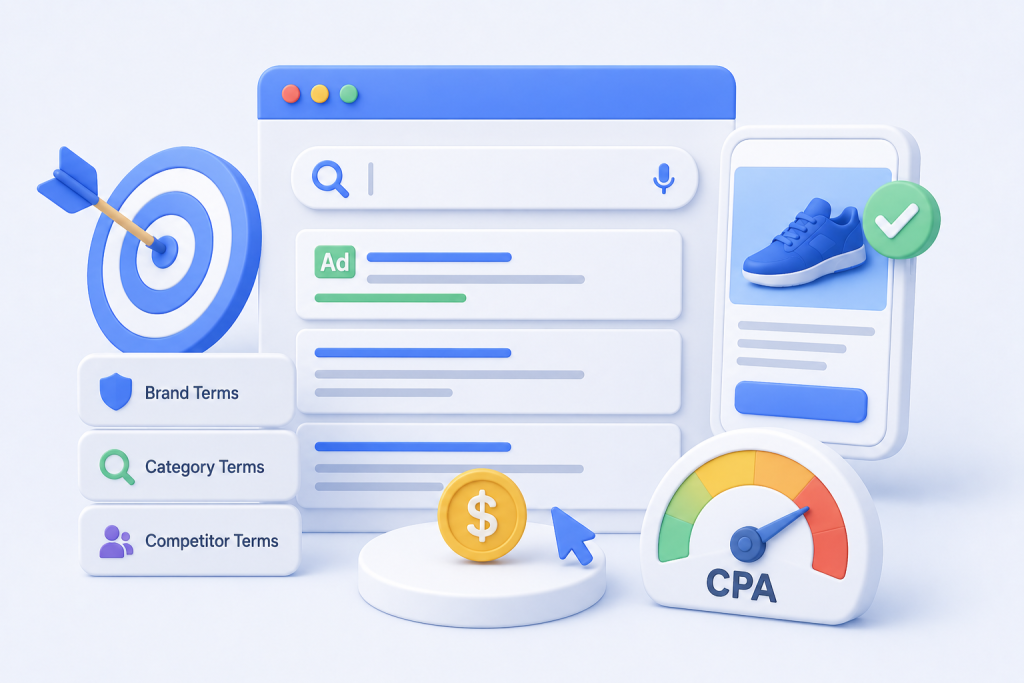
1. Google Shopping and Performance Max
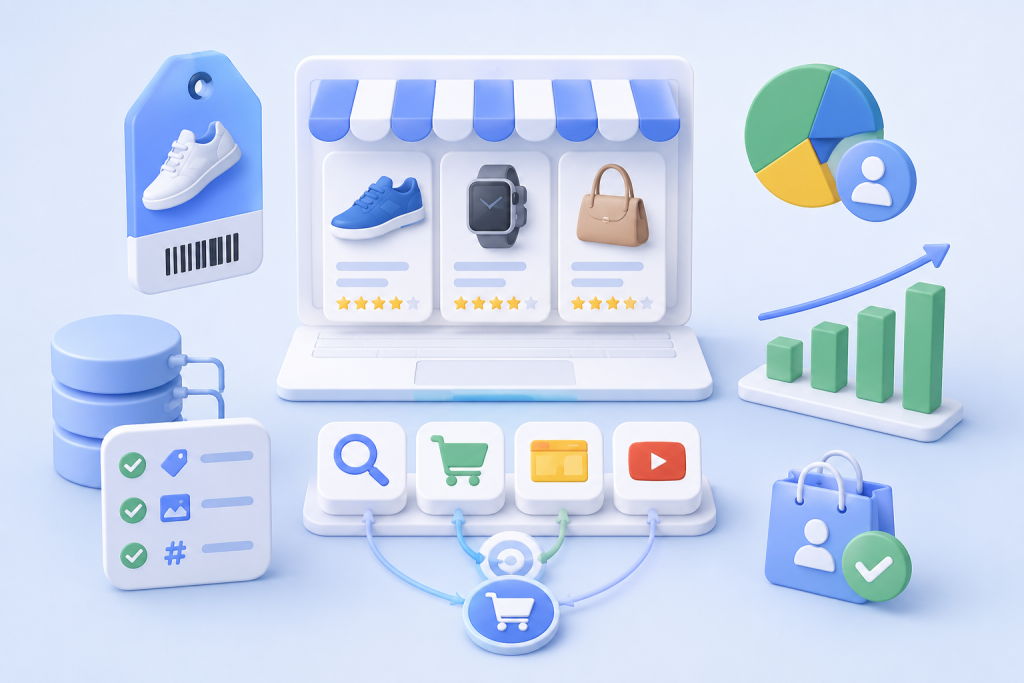
Google Shopping puts your product image, price, and store name directly in front of someone already searching to buy. Performance Max extends the same product feed across Shopping, Search, YouTube, Gmail, Display, and Maps from a single campaign, using Google’s automation to find buyers wherever they are.
It works because it captures intent at its strongest. A shopper typing “wireless earbuds under RM200” is far closer to a purchase than someone scrolling a feed, and a clean product listing meets that intent without friction. Shopping and Performance Max also tend to return the best ad spend efficiency of the paid channels when the feed is well built.
Start with the feed, not the campaign. Write clear titles that lead with the attributes people search (brand, product type, key spec), use high-quality images, and keep prices and stock accurate. Segment your best sellers into their own campaign so budget is not diluted across slow movers, and track purchase value rather than raw conversions so the automation optimises toward revenue. A managed Google Shopping Ads service helps here, because feed quality is where most stores quietly lose money. It pairs naturally with broader Google Ads management covering search and brand defence.
2. Paid social prospecting and retargeting on Meta and TikTok
Paid social does two jobs. Prospecting puts your brand in front of cold audiences who have never heard of you, and retargeting brings back people who visited, browsed, or added to cart but did not buy. Meta (Facebook and Instagram) remains the workhorse for both, and TikTok has become essential in Malaysia where short video and TikTok Shop drive real purchases.
Running both stages makes sense because prospecting fills the top of the funnel while retargeting harvests the demand you created. Retargeting audiences on Meta routinely return several times the ROAS of cold campaigns, since you are talking to people who already showed interest. On the prospecting side, creative does the heavy lifting, so the brands that win are the ones testing new hooks constantly rather than boosting the same post.
Give prospecting and retargeting separate budgets and separate creative. For cold audiences, lead with a strong first three seconds, a clear benefit, and social proof. For retargeting, remind people of the exact product they viewed and add a reason to act now, such as low stock or a bundle. Run TikTok as its own channel with native, creator-style video rather than recycled Meta assets. Ongoing social media advertising and dedicated TikTok Ads management keep the creative pipeline full, which is the real constraint on paid social.
3. Conversion rate optimisation on product and checkout pages
Conversion rate optimisation, or CRO, is the practice of improving the percentage of visitors who buy without spending a cent more on ads. On an e-commerce store, the highest-value pages are the product page and the checkout.
The case for CRO is the abandonment number. If seven in ten carts are left behind, and the rate is even higher on mobile, small fixes to the path from cart to confirmation can add revenue faster than any media buy. Baymard’s research ties abandonment to preventable causes such as surprise shipping costs, forced account creation, and a long checkout.
Start by watching real sessions to see where people drop off. Show total cost early, including shipping, so nothing surprises the buyer at the last step. Offer guest checkout, trim form fields, and match the payment options to local habits, which in Malaysia means FPX, e-wallets, and buy-now-pay-later alongside cards. Test one change at a time so you know what moved the number. Structured conversion rate optimisation turns existing traffic into more orders, which lifts the return on every other channel at once.
4. Email and SMS lifecycle flows
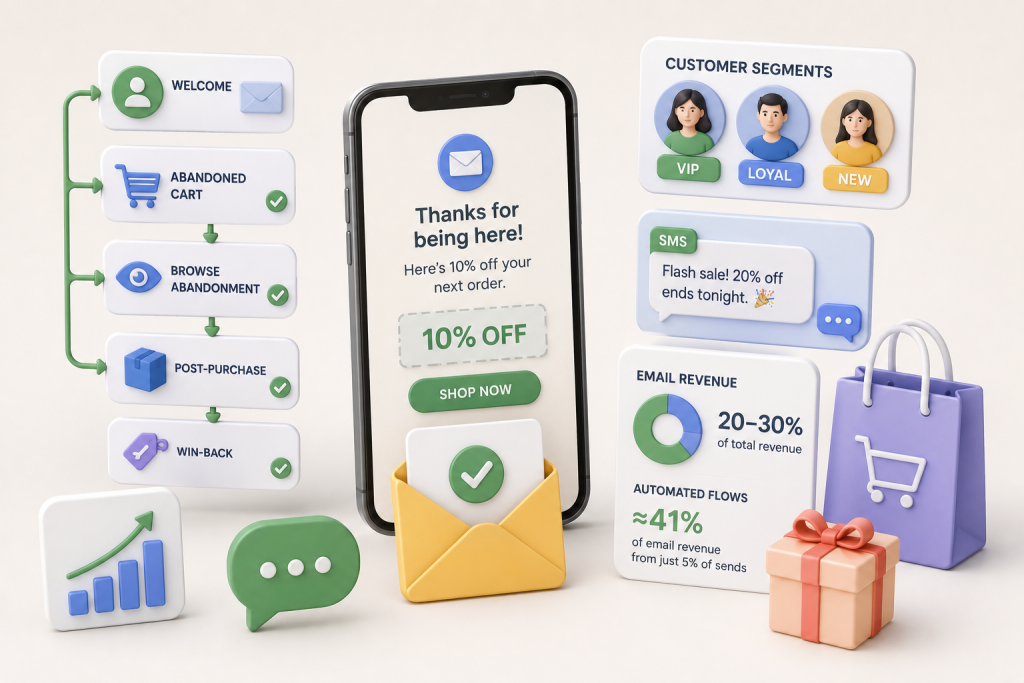
Lifecycle flows are automated messages triggered by what a customer does, sent by email and, increasingly, SMS. The core flows for e-commerce are the abandoned-cart series, the welcome series for new subscribers, and the post-purchase sequence that turns a first order into a second.
These flows earn their place because they run on tiny volume and return outsized revenue. Klaviyo data shows automated flows drive close to 30 to 40 percent of email revenue from a small slice of total sends, and abandoned-cart flows alone convert at an average of 3.33 percent. A three-email cart sequence has been shown to produce several times the revenue of a single reminder, so length and timing matter.
Set up an abandoned-cart flow that fires within an hour, then follows up over the next day or two with a reminder and a gentle incentive if needed. Build a welcome flow that introduces the brand and nudges the first purchase. Add a post-purchase flow that confirms the order, sets delivery expectations, asks for a review, and later suggests a reorder or a complementary product. Layer SMS onto the highest-intent moments, such as cart recovery, where a text lands faster than an email. This is owned media, so once built it keeps returning revenue without ongoing ad cost.
5. First-party data and accurate tracking
First-party data is the information customers share with you directly, such as email, phone, and purchase history, and accurate tracking is the plumbing that tells you which campaigns actually caused each sale. With browser signals degrading and privacy rules tightening, both have moved from nice-to-have to load-bearing.
This matters because every other tactic depends on it. If your tracking under-reports conversions, your Shopping and social algorithms optimise toward the wrong people, and your reported ROAS lies to you. Strong first-party data lets you build better lookalike audiences, exclude existing buyers from prospecting, and re-engage customers without paying a platform each time.
Put server-side tracking in place so conversions are measured reliably rather than lost to ad blockers and browser limits. Collect consent cleanly and give people a reason to share their details, such as a first-order offer. Connect your store, ad platforms, and email tool so purchase data flows back to where it improves targeting. Get this layer right early, because fixing broken measurement later means months of decisions made on bad numbers.
6. E-commerce SEO and content
Search engine optimisation for e-commerce is the work of ranking your category and product pages for the terms buyers actually type, and supporting them with content that answers questions higher up the buying journey. It is the channel that keeps delivering after the ad budget stops.
Its value is compounding. A category page that ranks for “running shoes Malaysia” brings in qualified visitors every day at no marginal cost, and buying guides capture people who are still researching and are cheaper to reach organically than through paid search. Over time, organic traffic lowers your blended customer acquisition cost, which is exactly what the tightening ROAS environment demands.
Focus first on your money pages. Give each category and key product page a clear title, useful copy, structured data for price and reviews, and a fast mobile load. Build top-of-funnel content around real buyer questions and comparisons, then link it to the relevant product pages. Fix the technical basics, because a store with slow, uncrawlable pages will never rank no matter how good the content is. A focused e-commerce SEO service turns your catalogue into a durable traffic source rather than a cost centre.
7. Influencer marketing and user-generated content
Influencer marketing partners your brand with creators whose audience trusts them, and user-generated content, or UGC, is the reviews, photos, and videos your own customers make. In a market shaped by TikTok and Instagram, both are less about celebrity reach and more about believable proof.
They work because people trust other people more than brands. A short, honest video from a micro-creator or a real customer often outperforms a polished studio ad, and that same clip can be repurposed as paid social creative to feed the constant testing Meta and TikTok reward. UGC gives you a steady stream of new hooks without a production budget for each one.
Work with micro-creators whose followers match your customer, and give them room to speak in their own voice rather than read a script. Collect UGC by asking for photos and videos in your post-purchase flow. Then put the best performing clips into your paid social account and on product pages, and track which creators actually drive sales, not just views.
8. Marketplace and omnichannel presence
Most Malaysian shoppers buy across several places, so marketplace and omnichannel presence means selling where they already are while still building your own store. Shopee leads with roughly 60 percent of the market, TikTok Shop has climbed to second, and Lazada holds third.
The logic is reach versus ownership. Marketplaces hand you enormous built-in traffic and buyer trust, but they own the customer relationship, control the margin, and can change the rules overnight. Your own store gives you the data, the margin, and the direct relationship, but you have to drive the traffic yourself. A brand that leans only on marketplaces is renting its customer base, and a brand that ignores them leaves easy sales on the table.
Use marketplaces to capture demand and win first-time buyers, and treat your own store as the place you build loyalty and repeat purchases. Keep pricing and branding consistent across channels so you are not undercutting yourself. Where you can, guide marketplace buyers toward your own channels for reorders through inserts, follow-up offers, and a better direct experience. If your store cannot match the speed and ease of a marketplace checkout, that gap is worth closing first, and solid e-commerce development is what makes an owned store competitive.
9. Budget allocation and measurement with ROAS, CAC, and LTV
The final tactic is the one that governs all the others: deciding where money goes and judging it against the right numbers. The three that matter most are return on ad spend (ROAS), customer acquisition cost (CAC), and customer lifetime value (LTV).
This discipline stops you from optimising the wrong thing. A campaign with a high ROAS on paper can still lose money once you count the true cost of acquiring the customer, and a channel with a modest ROAS can be your best if those buyers come back. With the blended average ROAS down to around 2.87, the brands that win measure LTV against CAC rather than chasing a single ROAS figure.
Set a target CAC based on how much a customer is worth over time, not just on the first order. Track ROAS by channel and campaign so you can shift budget toward what performs. Review LTV by acquisition source, because the cheapest customers to acquire are not always the most valuable, and rebalance monthly rather than reacting to daily noise. A coordinated performance marketing service runs this measurement loop across every channel so decisions are made on profit, not vanity metrics.
How to prioritise these tactics
You cannot do all nine at once, and you should not try. Sequence them by how quickly they protect and grow revenue.
Start with the leaks. Fix tracking so your numbers are trustworthy, and tighten the checkout and product pages so you stop losing paid traffic. These cost little and lift every channel at once.
Next, capture the demand that already exists. Turn on abandoned-cart and welcome flows, and get Google Shopping and retargeting running cleanly, because these convert warm buyers at the best efficiency.
Then build demand and durability. Scale paid social prospecting, invest in e-commerce SEO and content for compounding traffic, and add influencer and UGC to keep creative fresh. Manage marketplace and omnichannel presence throughout, and let budget allocation and measurement steer the whole system as it grows.
The rough order is measure, convert, capture, then expand. Money spent on expansion before the earlier layers are solid tends to leak straight back out.
Frequently asked questions
What counts as a good ROAS for a Malaysian e-commerce store?
There is no universal number, but with the blended average around 2.87, many stores aim for a break-even ROAS of roughly 2.5 to 3 and treat anything above 4 on a channel as strong. The better question is whether your ROAS covers your true CAC and still leaves margin once repeat purchases are counted.
Should I prioritise Google Ads or social media ads first?
If you sell products people actively search for, Google Shopping usually captures existing intent at the best efficiency, so it is a strong first move. Paid social is where you create demand and build the brand, so most growing stores end up running both, with the split guided by which returns better for your catalogue.
How long before performance marketing shows results?
Paid channels such as Shopping and retargeting can produce sales within days once tracking and feeds are set up correctly. CRO and lifecycle flows show up within weeks. SEO and content are the slow-burn channels, usually taking a few months to build momentum but paying back for a long time after.
Do I still need my own store if I sell well on Shopee and Lazada?
Yes. Marketplaces give you reach and trust, but they own the customer, the data, and much of the margin. Your own store is where you build repeat purchases and lifetime value, and it protects you from any single platform changing its terms.
What is the single most common e-commerce marketing mistake?
Spending on more traffic before fixing the funnel that traffic lands on. When most carts are abandoned and tracking is shaky, extra ad budget mostly buys more people who leave without paying. Fix conversion and measurement first, then scale.
Conclusion
Performance marketing for e-commerce is not a collection of clever hacks. It is a system where measurement, conversion, and channel work reinforce each other, judged on profit rather than reach. The stores that grow in 2026 will be the ones that plug their leaks, capture the demand they already pay for, and reinvest based on what the numbers actually say.
If you want a clear picture of where your store is losing money and which of these tactics to run first, talk to MediaPlus Digital. We offer a free RM300 e-commerce marketing audit that pinpoints the biggest revenue leaks and maps out the tactics likely to move your numbers fastest.