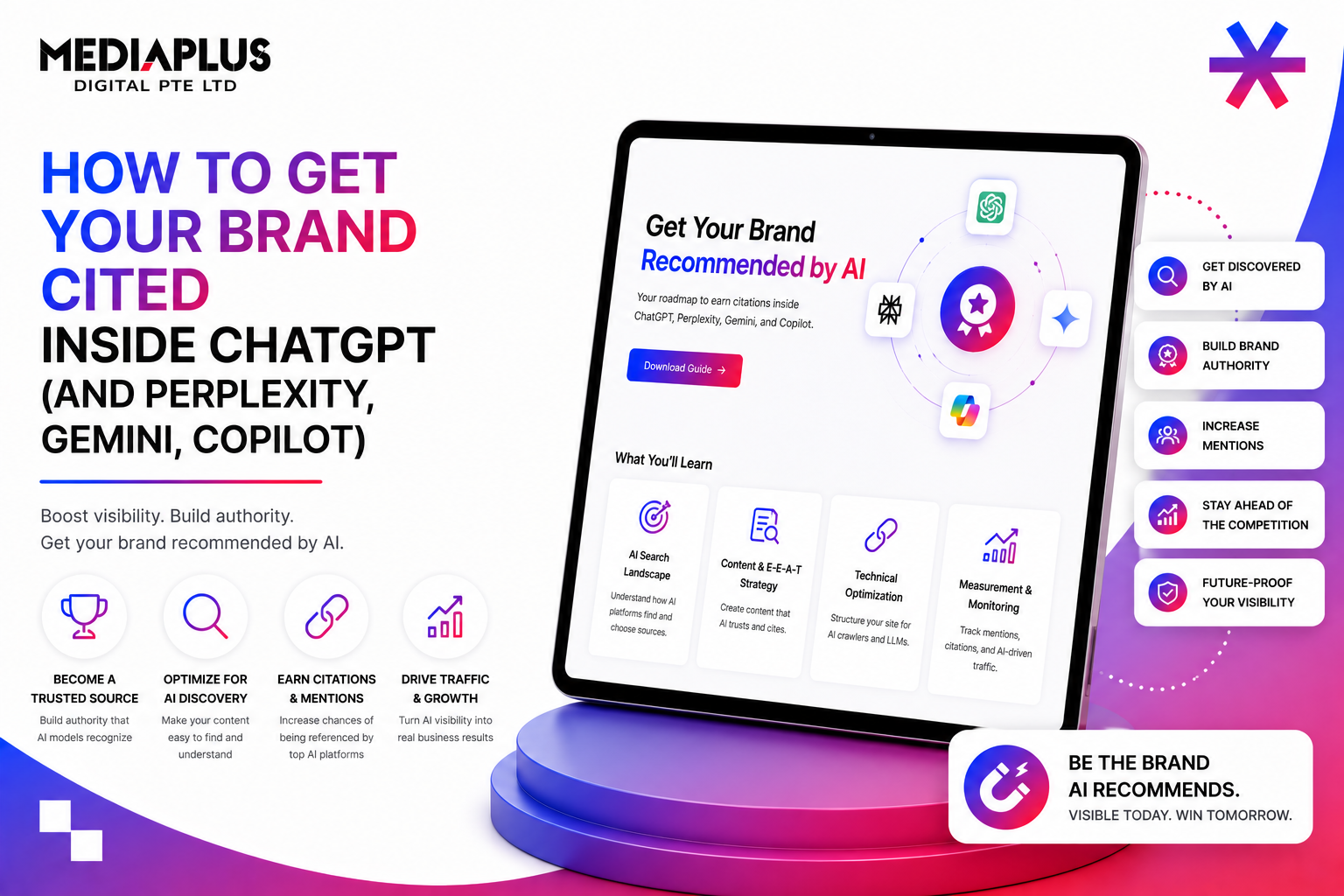
Quick answer: To get your brand cited by ChatGPT, earn mentions on the sources it trusts (Reddit, YouTube, Wikipedia, press, LinkedIn), publish content it can easily extract and quote, keep your brand details consistent everywhere, and let its crawlers access your site. The single strongest signal is not backlinks or domain rating, it is branded web mentions: what other people say about you on sites you do not control.
Mentions vs citations: know the difference
Two things happen inside ChatGPT, and they are not the same:
- A mention is when ChatGPT names your brand in its answer text.
- A citation is when ChatGPT links to your page or paraphrases it as a source.
You want both. A mention builds awareness; a citation sends the reader (and credit) to your site. Getting cited means being a URL ChatGPT is willing to link to or quote, which takes more than getting named in passing.
The single biggest factor: branded web mentions
Analysis of AI citations keeps landing on the same finding: the strongest predictor of showing up in AI answers is not backlinks or domain rating, it is branded web mentions, the references you earn when other people write about you on platforms you do not own.
ChatGPT builds its sense of your brand from the wider web. If credible sites, forums, and publications mention you in the right context, ChatGPT learns that you exist, what you do, and that you are trusted. That is why classic PR and community presence now feed AI visibility directly.
The sources ChatGPT trusts
ChatGPT leans on a recognisable set of sources. To be cited, you want a presence across them:
- Reddit and other active communities
- YouTube (video and transcripts)
- Wikipedia and knowledge-graph entries
- Mainstream and trade press
- Niche authority sites in your industry
- LinkedIn and Medium
You do not need all of them. You need enough credible, consistent mentions in the ones that matter for your industry.
How to get cited by ChatGPT: an 8-step playbook
1. Earn mentions on trusted third-party sites
Get written about: press coverage, trade publications, guest articles, podcast and YouTube appearances, and genuine participation in relevant Reddit and community threads. These branded mentions are the biggest lever.
2. Keep your brand details consistent everywhere
Name, description, category, location, and key facts should match across your site, LinkedIn, directories, and profiles. Inconsistent details confuse the model and weaken your entity.
3. Structure pages for extraction
Pages that answer a question directly, with clean headings and a clear first-line answer, are easy for ChatGPT to lift and cite. Lead with the answer, then explain. This is the same answer engine optimisation approach that wins featured snippets.
4. Add structured data (schema)
Use relevant schema (Organization, Article, FAQ, Product) so machines can read what your page is about. It helps your content and your brand entity be understood.
5. Let the AI crawlers in
Check your robots.txt does not block AI crawlers such as GPTBot and OAI-SearchBot, and consider an llms.txt file that points models to your key pages. If crawlers cannot reach you, you cannot be cited. See our GEO services for how we set this up.
6. Build cluster depth on your topics
One page is weak; a cluster is strong. Cover a topic thoroughly across several linked pages so ChatGPT sees you as an authority on it, not a one-off. This is the same topical authority idea that drives SEO.
7. Get on Wikipedia and knowledge graphs where you qualify
If your brand is notable enough, a well-sourced Wikipedia presence and a clean Google knowledge panel strengthen your entity across AI systems.
8. Measure what ChatGPT says about you
Track a set of prompts your customers would ask and check whether ChatGPT mentions or cites you. GEO tools exist for this. What you measure, you can improve.
How this connects to SEO (and where it differs)
Good SEO still helps: crawlable, well-structured, authoritative content is the foundation. The shift is that off-site reputation now matters even more. Traditional SEO chases links and rankings; getting cited by ChatGPT chases mentions and trusted-source presence. The best approach does both. For the wider picture, see our guide on how to get cited by AI and what generative engine optimisation means.
Frequently asked questions
How do I get my brand mentioned by ChatGPT?
Earn mentions on sources it trusts (Reddit, YouTube, Wikipedia, press, LinkedIn), keep your brand details consistent, publish content it can extract, and let its crawlers access your site. Branded web mentions are the biggest factor.
Does ChatGPT use my website directly?
It can, through its browsing and search features, if your pages are crawlable and answer questions clearly. But much of what it “knows” about your brand comes from other sites that mention you.
Are backlinks enough to get cited by ChatGPT?
No. Backlinks help, but branded mentions across trusted sites are a stronger predictor of being named or cited than backlinks or domain rating alone.
How long does it take?
It is ongoing, like SEO and PR. Mentions and consistency build your entity over months, not days.
Can I track whether ChatGPT cites me?
Yes. Pick prompts your customers would use and check ChatGPT’s answers, or use a GEO tracking tool that monitors mentions and citations.
The bottom line
Getting cited by ChatGPT is reputation plus structure. Earn credible mentions on the sources it trusts, keep your brand facts consistent, make your pages easy to extract, and let the crawlers in. It is PR, SEO, and content working together for a new surface: the AI answer.
Want your brand to show up when customers ask ChatGPT? Talk to MediaPlus Digital about our GEO and AI visibility services and claim a free RM300 consultation.