Running Google Ads is easy. Running them efficiently is not.
Many Google Ads accounts waste budget quietly due to poor structure, outdated settings, or lack of ongoing optimization. That is why a structured Google Ads optimization checklist is essential, especially for agencies and businesses managing campaigns at scale.
This guide breaks down Google Ads optimization into clear, actionable areas so you know what to optimize, why it matters, and how often to do it.
What Is Google Ads Optimization?
Google Ads optimization is the ongoing process of improving campaign efficiency and performance by refining keywords, targeting, bidding strategies, ad creatives, and landing pages.
It is not a one-time fix. Optimization is iterative and data-driven. Each change should be intentional, measurable, and aligned with business goals such as leads, revenue, or ROAS.

How Often Should You Optimize Google Ads?
There is no single answer, but best practice looks like this:
-
Daily: Health checks (spend, disapprovals, tracking)
-
Weekly: Search terms review, negative keywords, quick bid adjustments
-
Monthly: Deeper performance analysis, ad testing, budget reallocation
-
Quarterly: Structural changes, bidding strategy review, landing page improvements
Major changes should be followed by a 10–14 day learning period before judging results.
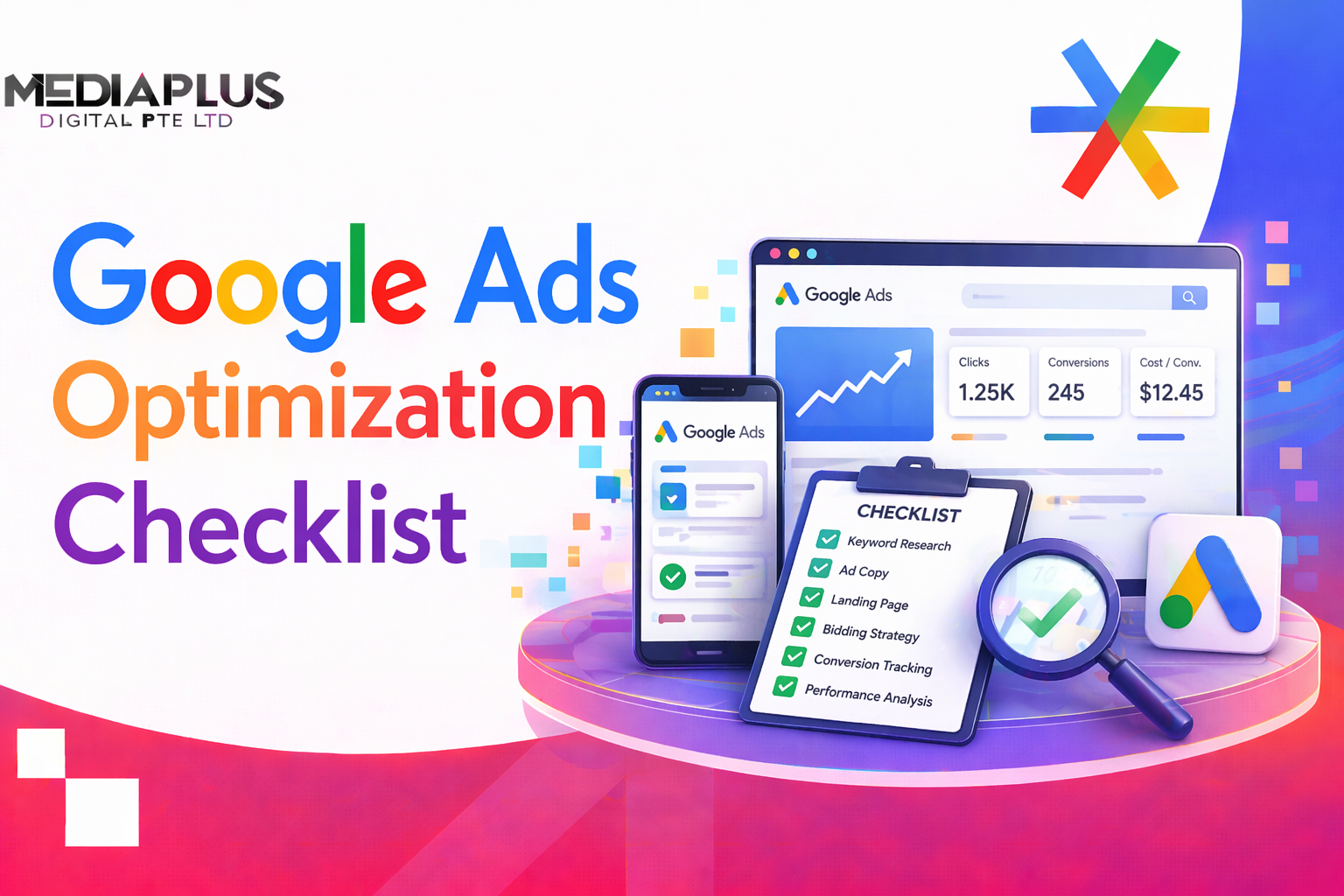
Google Ads Optimization Checklist (Step-by-Step)
1. Confirm Goals and Conversion Setup
Before optimizing anything, confirm:
-
Primary conversion actions (leads, purchases, bookings)
-
Target CPA or ROAS
-
Which conversions are primary vs secondary
Ensure conversion tracking is accurate and connected to Google Analytics 4. Incorrect tracking leads to incorrect bidding decisions.
2. Review Account and Campaign Structure
A strong structure makes optimization easier.
Check that campaigns are segmented by:
-
Search intent (brand, non-brand, competitor)
-
Product or service category
-
Geography
-
Funnel stage
Avoid mixing different intents in one campaign. Poor structure hides performance problems and limits control.
3. Optimize Keywords and Search Terms
Search term audits are one of the highest-impact optimizations.
Actions to take:
-
Add irrelevant queries as negative keywords
-
Promote high-performing queries into exact or phrase keywords
-
Reduce waste from uncontrolled broad match keywords
Many accounts reduce 10–30% wasted spend just by cleaning search terms regularly.
4. Review Keyword Match Types
A healthy balance is critical:
-
Exact match for control
-
Phrase match for scale
-
Broad match only with strong negative keyword discipline
Overly strict match types limit growth. Overly loose match types burn budget.
5. Improve Ad Quality and Messaging
Check all responsive search ads:
-
Aim for “Good” or “Excellent” ad strength
-
Use multiple unique headlines and descriptions
-
Align messaging with search intent
Each ad should have:
-
A clear value proposition
-
One strong call-to-action
-
Message match with the landing page

6. Use Ad Extensions Strategically
Ad extensions increase visibility and CTR.
Ensure you are using:
-
Sitelinks
-
Callouts
-
Structured snippets
-
Call or lead form extensions (where relevant)
Extensions often improve performance with minimal effort.
7. Review Bidding Strategies Carefully
Audit current bidding strategies:
-
Manual CPC or Enhanced CPC
-
Maximize Conversions
-
Target CPA
-
Target ROAS
Key checks:
-
Is there enough conversion data for smart bidding?
-
Are bid targets realistic?
-
Are strategies changed too frequently?
Automated bidding usually needs 15–20 conversions to stabilize.
8. Optimize Budget Allocation
Not all campaigns deserve equal budget.
Actions:
-
Identify high-performing campaigns limited by budget
-
Reduce spend on low-ROAS or low-intent campaigns
-
Protect brand and high-ROAS campaigns from budget caps
Focus budget where it drives revenue, not vanity metrics.
9. Review Location and Device Performance
Segment performance by:
-
Location
-
Device (mobile, desktop, tablet)
-
Time of day and day of week
Adjust bids cautiously. Remember that bid adjustments stack and can inflate CPCs unexpectedly.
10. Optimize Landing Pages (Often Ignored)
Google Ads performance is capped by landing page quality.
Check that landing pages:
-
Load fast on mobile
-
Match ad messaging and intent
-
Focus on one primary conversion goal
-
Provide trust signals and clear CTAs
High CTR with low conversion rate usually means a landing page issue, not a keyword issue.
11. Use Remarketing and RLSA Intelligently
Remarketing works best when focused on:
-
High-intent users
-
Bottom-of-funnel actions
-
Appropriate membership duration based on sales cycle
For RLSA, consider:
-
Custom ad copy for returning users
-
20–30% bid increase for known prospects
-
Excluding converted users from acquisition campaigns
12. Monitor Impression Share and Lost Opportunities
Review:
-
Lost impression share due to budget
-
Lost impression share due to rank
If a campaign has strong ROAS but low impression share, it may deserve more budget. Weak campaigns should be optimized before scaling.
13. Test Continuously, But Not Recklessly
Always be testing, but:
-
Test one variable at a time
-
Wait for statistical significance
-
Avoid changing bids, ads, and targeting simultaneously
Good optimization is disciplined, not reactive.
Common Google Ads Optimization Mistakes
-
Making changes too frequently
-
Blindly following platform recommendations
-
Ignoring mobile performance
-
Mixing objectives in one campaign
-
Optimizing based on CTR instead of conversions or ROAS
Avoiding these mistakes often improves results without increasing spend.

Final Thoughts and Google Ads Services Support
Google Ads optimization is not about hacks or shortcuts. It is about building a repeatable system that ensures spend is efficient, learnings are captured, and performance improves over time.
A structured checklist helps teams stay consistent, avoid costly oversights, and scale what works.
For businesses and agencies that want expert support, MediaPlus Digital Malaysia provides professional Google Ads services, covering account audits, campaign setup, keyword and bidding optimization, ad testing, landing page alignment, and performance reporting.
MediaPlus also integrates Google Ads with SEO, CRO, and analytics strategies, ensuring paid media contributes directly to real business outcomes, not just traffic.
If you are serious about maximizing ROI from paid search, a disciplined Google Ads optimization process is not optional. It is the foundation of sustainable PPC growth.