People use “web design” and “web development” as if they mean the same thing, but they are two different jobs. In the web design vs web development split, design is how a website looks and feels, and development is how it works. A great website needs both, and knowing the difference helps you hire the right people, brief them properly, and understand what you are paying for. This guide breaks it down clearly, with a comparison table, how the two roles work together, and how to decide what your project needs.
What is web design?
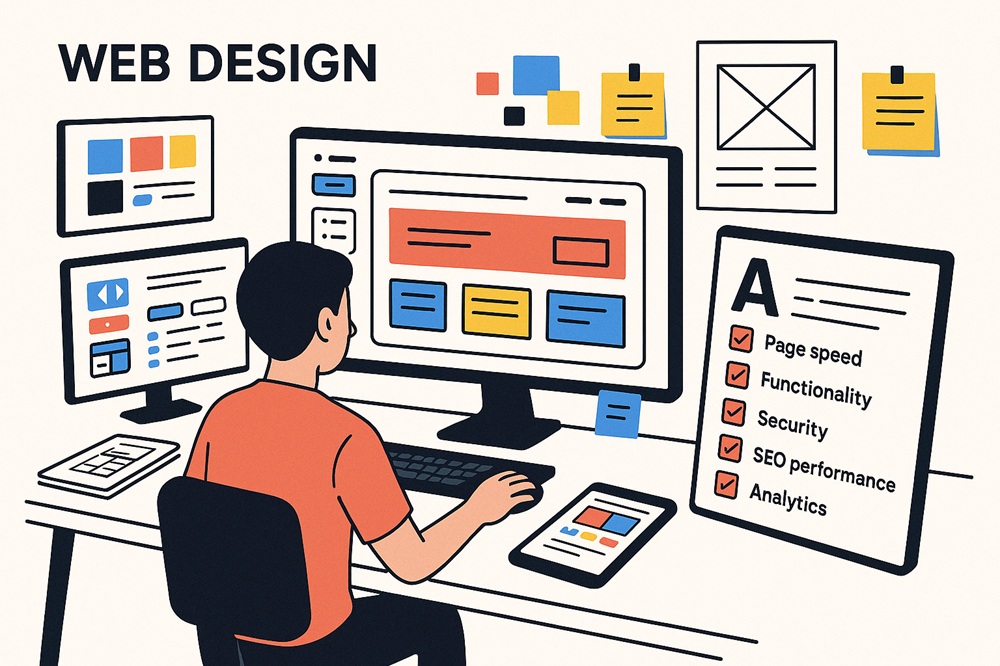
Web design is the visual and experience side of a website. A web designer decides how the site looks and how it feels to use: layout, colour, typography, imagery, and the flow from one page to the next. The goal is a site that is attractive, on-brand, easy to navigate, and built to convert.
Web design usually covers two disciplines:
- UX (user experience) design: how the site is structured and how easily people can do what they came to do.
- UI (user interface) design: the visual details, buttons, spacing, colour, and typography that people interact with.
Designers work in tools like Figma and Adobe XD, producing wireframes, prototypes, and the final visual design that developers then build.
What is web development?
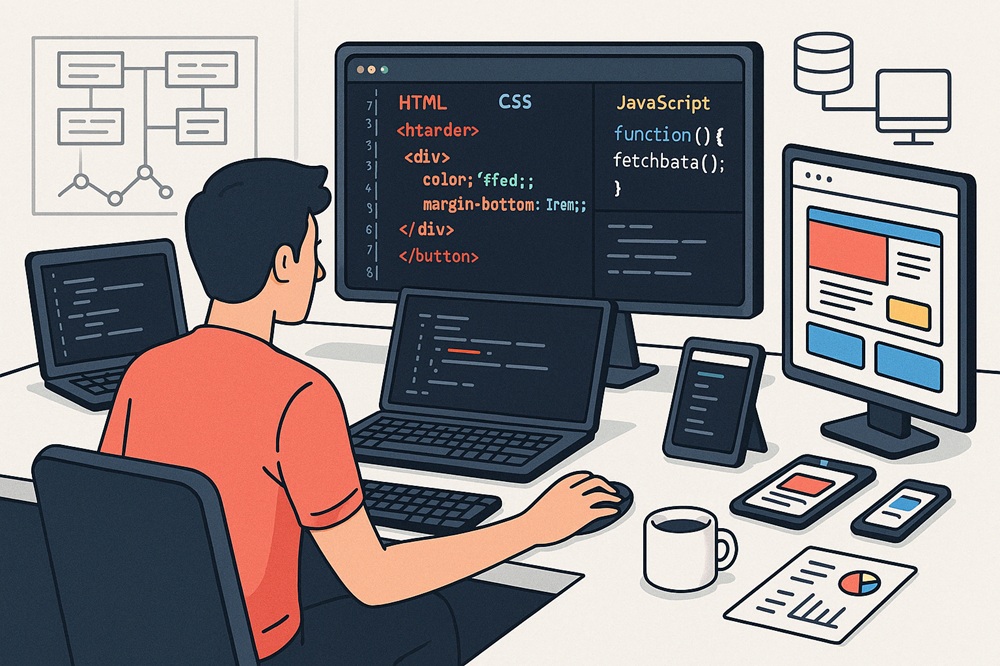
Web development is the technical side that turns a design into a working website. A web developer writes the code that makes the site load, respond, and function. Development splits into three areas:
- Front-end development: the part users see, built with HTML, CSS, and JavaScript. Front-end developers turn the design into a responsive, interactive interface.
- Back-end development: the server, database, and logic behind the scenes, using languages like PHP, Python, or Node.js. This powers things like logins, payments, and content management.
- Full-stack development: developers who handle both front-end and back-end.
Where designers make it look right, developers make it work right.
Web design vs web development: comparison table
|
Web design |
Web development |
|
|
Focus |
How the site looks and feels |
How the site works |
|
Main job |
Layout, UX, UI, branding |
Coding, functionality, performance |
|
Skills |
Visual design, UX, prototyping |
HTML, CSS, JavaScript, back-end languages |
|
Tools |
Figma, Adobe XD, Photoshop |
VS Code, Git, React, databases |
|
Output |
Wireframes, prototypes, visual design |
A working, coded website |
|
Mindset |
Creative and user-focused |
Logical and problem-solving |
The key differences explained
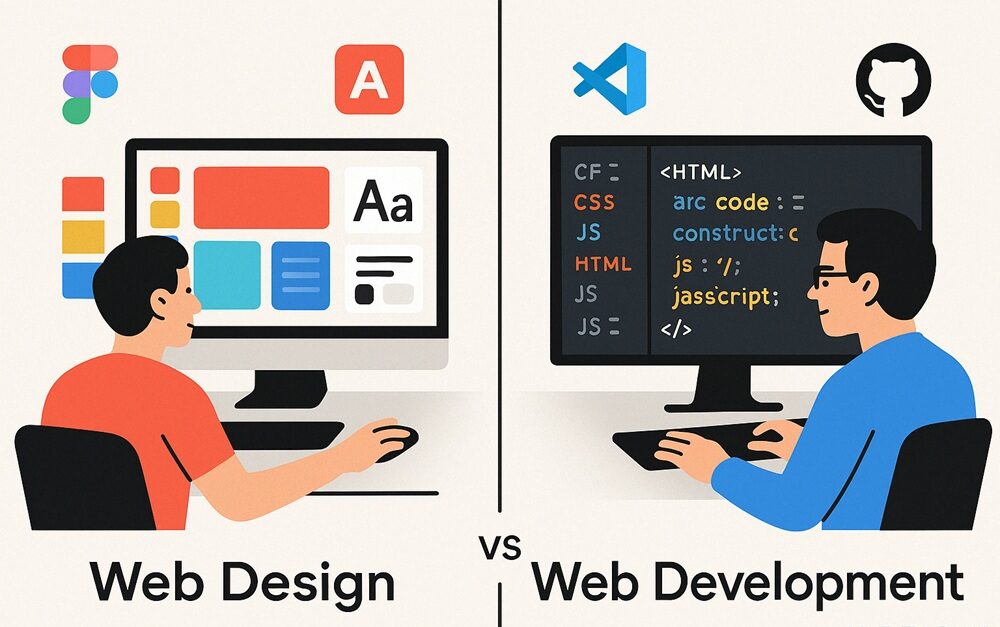
- Look versus function. Design decides how it looks and flows. Development makes it actually work.
- Tools and languages. Designers use visual tools like Figma. Developers write code in editors and manage version control and databases.
- Output. A designer hands over a design file. A developer hands over a live, functioning site.
- Cost. Developers, especially back-end and full-stack, often command higher rates because of the technical depth, though strong senior designers are also highly valued. In Malaysia, both are usually bundled into a project quote rather than charged separately.
How web design and web development work together
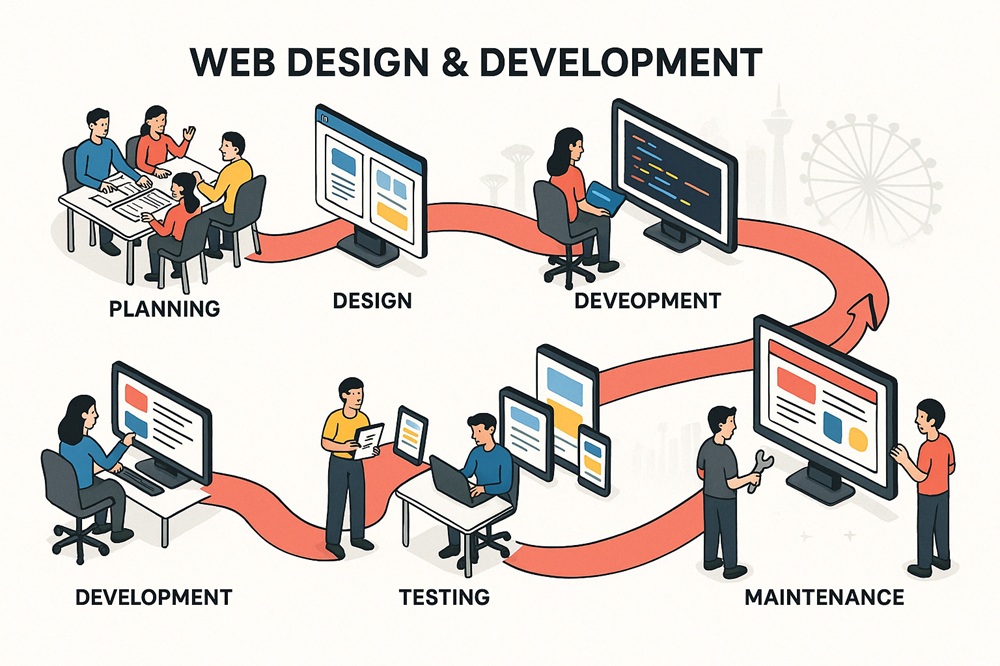
Design and development are not rivals. They are two stages of one process, and the handoff between them is where projects succeed or fail.
A typical flow looks like this: the designer creates wireframes and a visual design, agrees it with the client, then hands it to the developer to build. Modern tools have made this smoother. Figma’s Dev Mode, for example, lets developers inspect a design, pull spacing and colour values, and export assets, which reduces the guesswork in translating design to code.
The best results come when designers and developers collaborate early, so the design is both beautiful and buildable, and the build stays true to the design. At an agency like MediaPlus, both sit on the same team, which removes the friction of stitching two vendors together.
Skills and tools at a glance
Web designer
- Visual design, UX and UI, wireframing and prototyping
- Understanding of branding, typography, and colour
- Basic HTML and CSS knowledge helps
- Tools: Figma, Adobe XD, Photoshop, Illustrator
Web developer
- HTML, CSS, and JavaScript, plus frameworks like React or Vue
- Back-end languages (PHP, Python, Node.js) and databases
- Version control with Git, and performance and security know-how
- Tools: VS Code, Git and GitHub, testing and deployment tools
Both share soft skills too: problem-solving, communication, attention to detail, and a focus on the user and on accessibility, so the site works for everyone.
Which do you need for your project?
If you are a business, the honest answer is usually both, but in a specific order:
- You mostly need design when your site works but looks dated, is hard to use, or does not reflect your brand. A redesign of the look and structure will fix it.
- You mostly need development when you need new functionality: a booking system, a store, custom features, or integrations.
- You need both when building a new website or an online store, which is nearly every project. Design shapes it, development builds it.
For most Malaysian businesses, hiring one team that does both, from web design and development to WordPress or eCommerce, is simpler and avoids the finger-pointing that happens when a designer and a developer work separately.
Which career path is right for you?
If you are choosing a career rather than hiring:
- Choose web design if you enjoy creativity, visual problem-solving, branding, and shaping how people experience a product.
- Choose web development if you prefer logic, coding, building systems, and solving technical problems.
- Consider both. Roles like design engineer and product designer increasingly bridge the two, and knowing some of each makes you more valuable.
Frequently asked questions
What is the difference between web design and web development?
Web design is how a website looks and feels, covering layout, UX, and UI. Web development is how it works, covering the coding and functionality. Design shapes the site; development builds it.
Do I need a web designer and a web developer?
For most websites, yes. Design makes it look good and easy to use, while development makes it function. Many agencies provide both in one team, which is simpler than hiring separately.
Is web design or web development harder?
Neither is harder, they are different. Design leans on creativity and user thinking, while development leans on logic and coding. Both take skill to do well.
Can one person do both?
Yes. Full-stack developers and design-focused developers exist, and some professionals do both. For a serious project, though, dedicated design and development usually produce a better result.
Does web design or web development pay more?
Development, especially back-end and full-stack, often pays more because of its technical depth, though senior designers are also well paid. Rates vary by experience and location.
Final thoughts
In the web design vs web development question, there is no winner. They are two halves of the same job. Design decides how your website looks and feels, development makes it work, and a great site needs both done well and working together. Understanding the difference helps you hire the right people and get a website that both looks the part and performs.
If you want both handled by one team, our web design and development service covers design, build, and everything in between. Talk to MediaPlus Digital and claim a free RM300 website review.