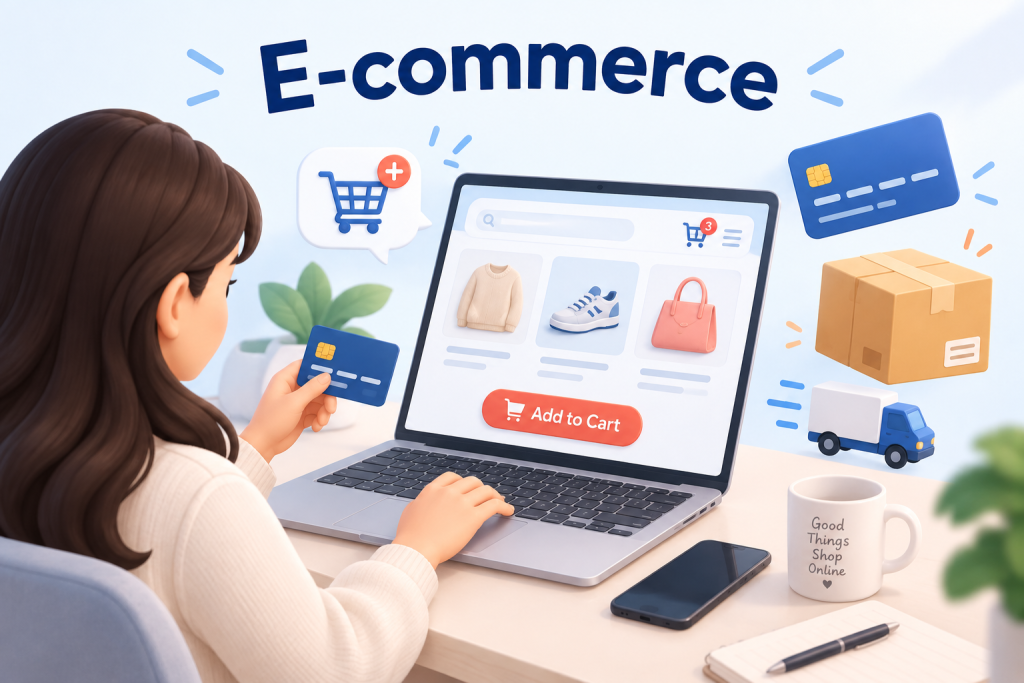
Quick answer: E-commerce (electronic commerce) means buying and selling goods or services over the internet. It covers online stores, marketplaces, and any transaction that happens digitally, from a boutique’s website to Shopee, Lazada, or booking a service online. The main types are B2C, B2B, C2C, and C2B, and it works through a website or app, a payment gateway, and delivery.
What is e-commerce?
E-commerce, short for electronic commerce, is the buying and selling of products or services online. Instead of a physical shop, transactions happen through a website, app, or marketplace, with payment handled digitally and goods shipped or delivered (or, for services, delivered online).
It ranges from a small business selling on its own online store to giant marketplaces like Shopee, Lazada, and Amazon, to booking flights, software subscriptions, and digital downloads.
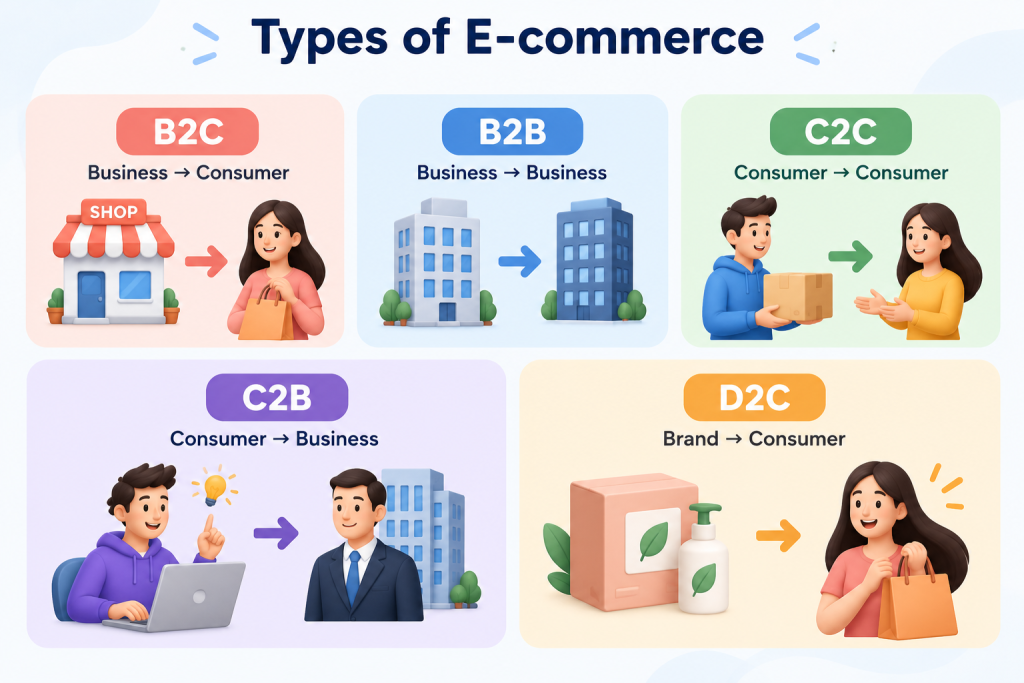
The main types of e-commerce
|
Type |
Meaning |
Example |
|
B2C |
Business to Consumer |
A brand selling to shoppers on its website |
|
B2B |
Business to Business |
A supplier selling wholesale to other businesses |
|
C2C |
Consumer to Consumer |
People selling to each other (Carousell, marketplace) |
|
C2B |
Consumer to Business |
A freelancer or influencer selling to a company |
There is also D2C (direct to consumer), where a brand sells straight to shoppers without middlemen.
How e-commerce works
- A customer browses your online store or marketplace listing.
- They add items to a cart and go to checkout.
- They pay through a payment gateway (cards, FPX, e-wallets). See payment gateways in Malaysia.
- You receive the order and fulfil it (ship the product or deliver the service).
- The customer gets their purchase, and ideally comes back.
Behind that sit the platform (like Shopify or WooCommerce), hosting, and marketing.
Why e-commerce matters
- Reach: sell beyond your physical location, even nationwide or abroad.
- Always open: your store sells 24/7.
- Lower overheads: often cheaper than a physical shop.
- Data: you learn exactly how customers behave and buy.
- Growth: it scales as demand grows.
Benefits and challenges
Benefits: wider reach, lower cost, round-the-clock sales, and rich customer data. Challenges: competition, the need for good UX and trust, payment and delivery logistics, and marketing to get found. A well-built, fast, trustworthy store is what turns visitors into buyers.
E-commerce in Malaysia
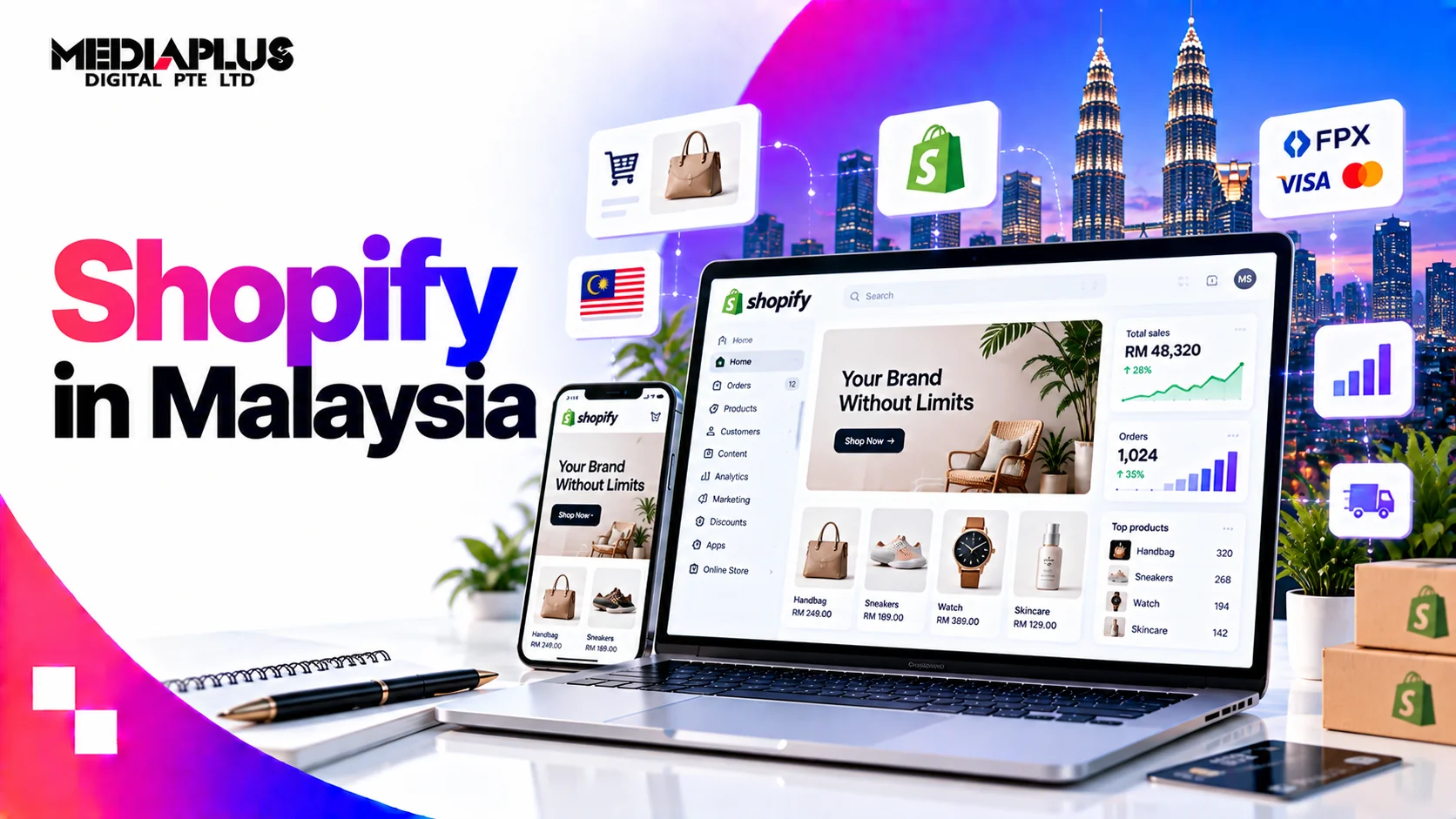
E-commerce is booming in Malaysia, across marketplaces (Shopee, Lazada), social commerce (TikTok Shop, Instagram), and brands’ own stores. Many businesses use a mix: their own website for brand and margin, plus marketplaces for reach. To build your own store, see ecommerce development.
Frequently asked questions
What is e-commerce in simple terms?
Buying and selling products or services online, through a website, app, or marketplace, with digital payment.
What are the main types of e-commerce?
B2C (business to consumer), B2B (business to business), C2C (consumer to consumer), and C2B (consumer to business), plus D2C (direct to consumer).
What is an example of e-commerce?
Buying from an online store, ordering on Shopee or Lazada, subscribing to software, or booking a service online are all e-commerce.
What do I need to start an e-commerce business?
An online store (on a platform like Shopify or WooCommerce), a payment gateway, a way to fulfil orders, and marketing to get found. See our guide to starting an ecommerce business.
Is e-commerce the same as e-business?
Not quite. E-commerce is the buying and selling; e-business is broader, covering all online business activity, including operations and internal processes.
The bottom line
E-commerce is simply commerce done online, selling products or services through a website, app, or marketplace. It lets businesses reach more customers, sell around the clock, and grow, provided the store is fast, trustworthy, and easy to buy from. For most businesses today, an e-commerce presence is no longer optional.
Want to build an online store that sells? Talk to MediaPlus Digital about ecommerce development, and claim a free RM300 consultation.