Most buying decisions in Malaysia start the same way: someone pulls out their phone and types a question into Google. If your business does not show up in those results, a competitor takes the customer instead. That is the whole case for SEO in one sentence.
The numbers back it up. BrightEdge found that about 68% of online experiences begin with a search engine, and organic search still drives the largest share of trackable website traffic for most businesses. In Malaysia specifically, DataReportal’s Digital 2024 report shows that most web traffic now comes from mobile phones, which means how you rank on a small screen matters as much as anything you do on desktop. Google has also reported that a large share of “near me” and local searches lead to a store visit or a call within a day, so ranking well locally turns searches into walk-ins.
This guide covers 28 small business SEO tips for Malaysia (SME SEO Malaysia, if you prefer the acronym), from the free things you can do this afternoon to the technical work you might hand to a specialist later. Each one is short and practical. Start at the top, work down, and skip what does not apply to your business.
Quick-reference checklist
If you only have five minutes, here is the whole plan grouped into five themes. Come back to this table whenever you lose track of what to do next.
|
Theme |
Tips |
What it does |
|
Foundations |
1 Google Business Profile, 2 Keyword research, 3 High-quality content, 4 On-page SEO |
Gets you findable and gives Google something to rank |
|
Content |
17 Video, 19 Long-tail keywords, 20 Featured snippets, 21 User-generated content, 22 Regular blog |
Brings in searchers and answers their questions |
|
Local |
9 Local SEO, 10 Social media, 11 Simple Google site, 13 Voice search |
Wins nearby customers and map-pack visibility |
|
Technical |
5 Site speed, 6 Mobile-friendliness, 7 Schema, 14 XML sitemap, 16 Core Web Vitals, 18 HTTPS, 23 Image optimization, 25 Site structure, 27 Canonical tags |
Makes the site fast, crawlable, and clean |
|
Ongoing |
8 Backlinks, 12 Internal linking, 15 Monitor performance, 24 Search Console, 26 E-E-A-T, 28 Stay updated |
Builds authority and keeps rankings from slipping |
Foundations
1. Claim and optimize your Google Business Profile
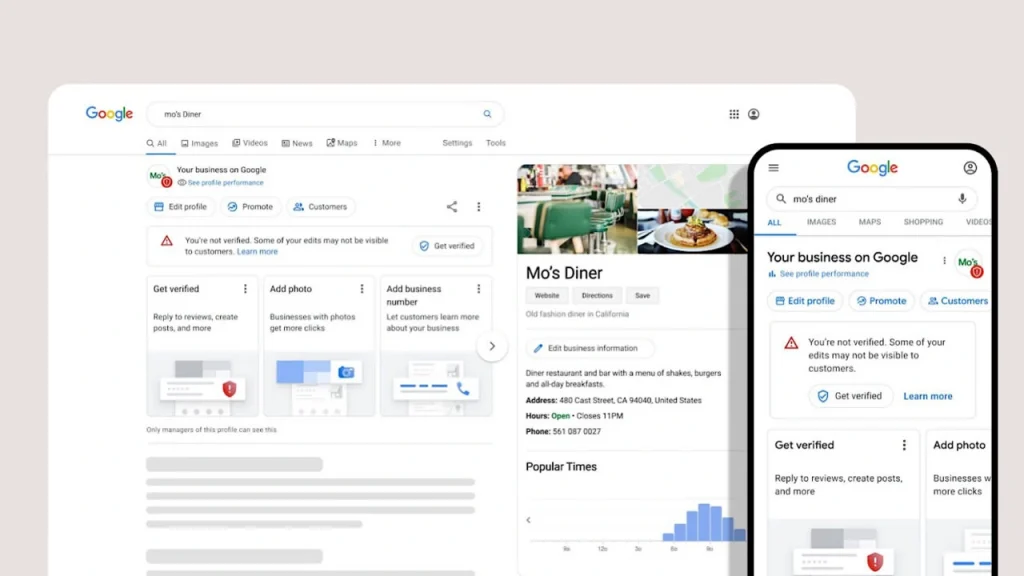
For a local business, your Google Business Profile is often the first thing a customer sees, sometimes before they ever reach your website. Claim it, verify it, and make sure your name, address, and phone number are exactly right. Add real photos, post updates now and then, and reply to reviews. A kedai kopi in Penang that keeps its profile current will show up in the local map pack far more often than one that set it up once and forgot it. If you want help getting this right, our Google My Business optimisation service handles the whole setup.
2. Do keyword research before you write anything
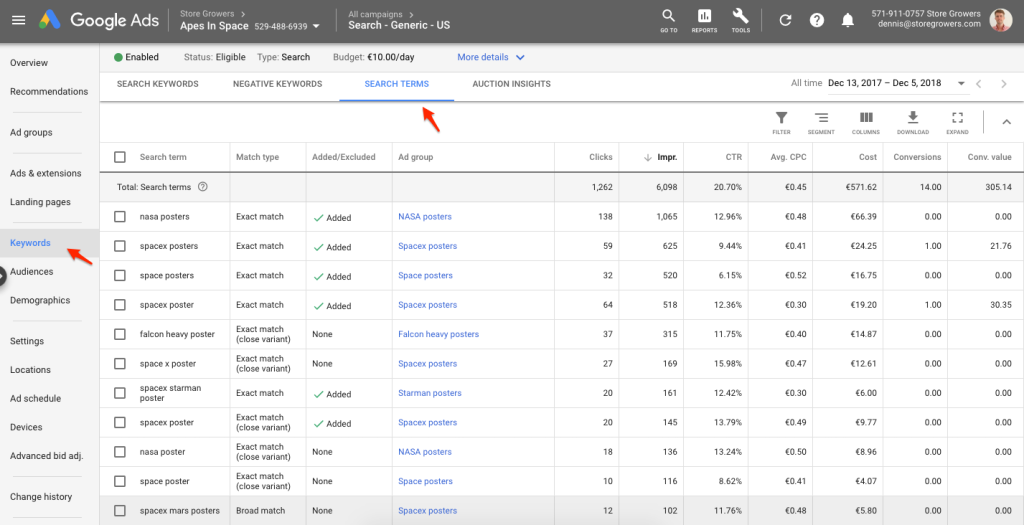
Guessing what people search for is a waste of good writing. Use Google Keyword Planner, Ahrefs, or Ubersuggest to find the terms your customers actually type. Pay attention to Malaysian phrasing, including the Malay-English mix people use in real searches (“cari plumber Subang”, for example). Group the keywords by what the searcher wants: information, a comparison, or a ready-to-buy query.
3. Write content that answers real questions
Thin pages that repeat a keyword do nothing. Write pages and posts that answer the questions your customers ask you in person. Use local examples, add a photo or two, and update older pieces when the facts change. For a business serving a mixed-language audience, having some content in both English and Malay can widen your reach without much extra effort.
4. Get the on-page basics right
On-page SEO is the low-effort, high-return part. For each important page, write a title tag with your main keyword near the front, a meta description under about 155 characters, and a clear H1. Keep URLs short and readable. Fill in alt text on images. WordPress plugins like Yoast or Rank Math walk you through most of this. If your site itself needs rebuilding to support all this, our web design and development team can set it up properly from the start.
Technical
5. Make your site load fast
Malaysian mobile connections vary a lot by area, so speed is not optional. Compress your images, put a CDN like Cloudflare in front of the site, turn on caching, and trim unused CSS and JavaScript. Run the site through Google PageSpeed Insights and aim to load in under three seconds. A slow product page loses the sale before it ever appears.
6. Design for mobile first
Since most Malaysian web traffic is mobile (DataReportal), your phone layout is the main layout. Text should be readable without pinching, buttons should be easy to tap, and pop-ups should not cover the screen the moment someone lands. Google’s Mobile-Friendly Test flags the obvious problems.
7. Add schema markup
Schema is code that tells Google exactly what a page is about, which can earn you rich results like star ratings or FAQ dropdowns in the search listing. The types worth adding for most Malaysian businesses are LocalBusiness, Review, Product, and FAQPage. Check your work with Google’s Rich Results Test.
8. Build backlinks worth having
Links from other reputable sites still count as votes of confidence. Earn them by guest posting on Malaysian blogs, getting featured in outlets like The Star or Vulcan Post, partnering with industry associations, or teaming up with businesses that complement yours. Avoid buying cheap link packages; they tend to hurt more than help. Backlinks are part of the ongoing work we cover in our SEO services in Malaysia.
Local
9. Treat local SEO as its own project
Local SEO is where small businesses win against bigger national brands. Keep your name, address, and phone identical across every directory. Build a page for each location you serve, manage reviews actively, and add local business schema. Content tied to Malaysian holidays and events (a Raya promotion, a Merdeka sale) helps too. For a car rental in KL, ranking for “car rental near KLCC” is worth more than ranking for a generic national term. Our local SEO services focus on exactly this.
10. Use social media to support search, not replace it
Social signals do not directly move rankings, but an active Facebook, Instagram, or TikTok presence builds brand searches and sends people to your site, both of which help indirectly. Post where your customers already are. A florist in Johor Bahru will get more from a steady Instagram feed than from spreading thin across five platforms.
11. Use a simple Google site if you have nothing yet
If you do not have a website at all, Google Business Profile can generate a basic one-page site for free in minutes. It is not a substitute for a real website, but it gives you something indexable while you plan the proper build.
12. Link your pages together
Internal linking helps visitors find related content and helps Google understand which pages matter most. Use descriptive anchor text, link blog posts to the service pages they relate to, and point extra links at the pages you most want to rank. A blog post about “office cleaning tips” should link to your commercial cleaning service page.
13. Optimize for voice search
People speak differently than they type. Voice queries are longer and more conversational (“where’s the nearest halal bakery open now”). Target those question-style phrases, build FAQ pages, and keep your local details accurate. AnswerThePublic is a cheap way to find the questions people actually ask.
More technical foundations
14. Submit an XML sitemap
A sitemap lists your pages so Google can find them all. Generate one with Yoast or Rank Math and submit it through Google Search Console. Check back every so often to confirm new pages are getting indexed.
15. Monitor your performance
You cannot improve what you do not measure. Use Google Analytics 4 for traffic, Search Console for impressions and the keywords you rank for, and a tool like Ahrefs or Ubersuggest for backlinks. Review the numbers monthly and adjust based on what is working, not on what you assumed would work.
16. Fix your Core Web Vitals
Core Web Vitals are Google’s page-experience metrics: how fast the main content loads (LCP), how quickly the page responds to a tap (INP, which replaced FID in 2024), and how much the layout shifts while loading (CLS). PageSpeed Insights shows your scores and tells you what to fix first.
17. Add video content
Video does well in Malaysia on both YouTube and TikTok. Short explainers, product demos, and customer testimonials all work. Upload to YouTube and embed the videos on the relevant pages so they help those pages too. A tour operator can turn one trip recap into a video that ranks for years.
18. Move to HTTPS
A secure site earns trust and a small ranking benefit. Install an SSL certificate (most Malaysian hosts include one free) and redirect all HTTP traffic to HTTPS so there is only one version of your site.
19. Target long-tail keywords
Long-tail keywords are longer, more specific phrases like “affordable accounting firm in Shah Alam”. They get fewer searches but convert far better and are much easier to rank for, which is ideal when you are competing against established players. Build a page or post around each one that fits your services.
20. Aim for featured snippets
Featured snippets are the boxed answers at the top of some results. To win them, answer a common question in a clear paragraph, then back it up with a list or table. Look at the snippet that currently ranks for your target question and write something more useful.
21. Encourage user-generated content
Reviews, testimonials, and customer photos count as fresh, trustworthy content that you did not have to write. Ask happy customers for a Google review, invite testimonials, and encourage tags on social media. A restaurant in Ipoh with a steady stream of recent reviews looks more alive to both Google and diners.
22. Keep a regular blog
One or two posts a month is enough if they are genuinely useful: local trends, how-to guides, answers to the questions customers ask. A consistent blog brings in searchers, gives you pages to target secondary keywords, and builds trust over time. Do not blog for the sake of it; blog to answer things people search for.
23. Optimize your images
Large images slow pages down and hurt rankings. Compress every image, name the file something descriptive (“penang-nasi-kandar.jpg” beats “IMG_2043.jpg”), write real alt text, and serve modern formats like WebP where you can.
24. Use Google Search Console properly
Search Console is free and tells you how Google actually sees your site. Use it to submit your sitemap, fix crawl errors, track which keywords bring impressions, and watch for mobile usability issues. Turn on email alerts so you hear about problems early.
25. Build a clean site structure
Visitors and search engines should reach any important page within about three clicks of the homepage. Group pages by topic, keep navigation simple, and make sure nothing important is buried. A clear structure improves the experience and helps Google crawl efficiently. If yours has grown messy, it may be time to rethink the site’s design and development.
Ongoing
26. Strengthen your E-E-A-T
Google leans on E-E-A-T (experience, expertise, authoritativeness, trustworthiness), especially for anything touching money, health, or law. Show it: publish author bios with real credentials, cite credible sources, display your contact details and business registration, and let reviews and media mentions accumulate. This matters more every year as AI-generated content floods the web.
27. Use canonical tags to avoid duplicates
When the same content lives at more than one URL (common with product listings, filters, and archives), a canonical tag tells Google which version is the real one. This prevents duplicate-content confusion and keeps your ranking signals pointed at a single page. Ecommerce sites feel this most, which is why our ecommerce SEO services treat canonicals as a priority.
28. Stay updated on SEO trends
SEO changes constantly. Follow a few reliable sources like the Ahrefs blog, Search Engine Journal, and Google’s own Search Central updates. Join a Malaysian marketing community and keep an eye on MDEC and SME Digitalisation Grant webinars. One thing worth watching now: AI answers and generative search are changing how people find businesses, and our generative engine optimisation (GEO) services exist to help you show up in those AI results.
How to prioritise if you’re just starting
Twenty-eight tips can feel like a lot. Here is the order that gets results fastest.
Week 1: Claim and fill out your Google Business Profile (tip 1), switch to HTTPS if you have not (tip 18), and set up Google Search Console and Analytics (tips 15 and 24). These are quick and give you visibility straight away.
Month 1: Do proper keyword research (tip 2), fix the on-page basics on your top pages (tip 4), sort out site speed and mobile (tips 5 and 6), and start collecting reviews (tips 9 and 21).
Ongoing: Publish useful content on a schedule (tips 3 and 22), build a few good backlinks each month (tip 8), and check your Search Console numbers monthly (tip 15). SEO compounds, so the businesses that keep going quietly overtake the ones that stop. Turning that traffic into actual enquiries is a separate skill; our conversion rate optimisation service covers that side.
Frequently asked questions
How long does SEO take for a small business in Malaysia?
Usually three to six months to see meaningful movement, and longer for competitive terms in cities like KL. Local SEO for a specific area often shows results sooner because there is less competition. Anyone promising page-one rankings in a week is selling something.
How much does SEO cost in Malaysia?
It ranges widely. A small local business might spend a few hundred ringgit a month on a light package, while competitive ecommerce SEO runs into the thousands. Doing the basics yourself costs only your time. The right budget depends on how competitive your keywords are and how fast you need results.
Can I do SEO myself?
Yes, for a good chunk of it. The Google Business Profile, on-page basics, reviews, and blogging are all doable without an agency. The technical work (Core Web Vitals, schema, structured link building) is where most owners bring in help once the easy wins are done.
Is local SEO enough on its own?
For a business that serves one town or a few neighbourhoods, local SEO is often the highest-value work you can do. But if you sell online or want customers beyond your immediate area, you will also need broader content and backlink work to rank nationally.
Do I really need a blog?
Not on day one, but it helps a lot over time. A blog gives you pages to rank for the questions customers search, and it feeds your internal linking and E-E-A-T. If you can only manage one post a month, that is still worth doing as long as each post is useful.
Where to start
You do not need to do all 28 things this month. Claim your Google Business Profile, fix your on-page basics, get the site fast on mobile, and start asking customers for reviews. Those four alone will move the needle for most small businesses in Malaysia. Add the rest as you go.
If you would rather have someone handle it, we offer a free RM300 SEO audit that shows exactly where your site stands and what to fix first. Get in touch and we will take a look.