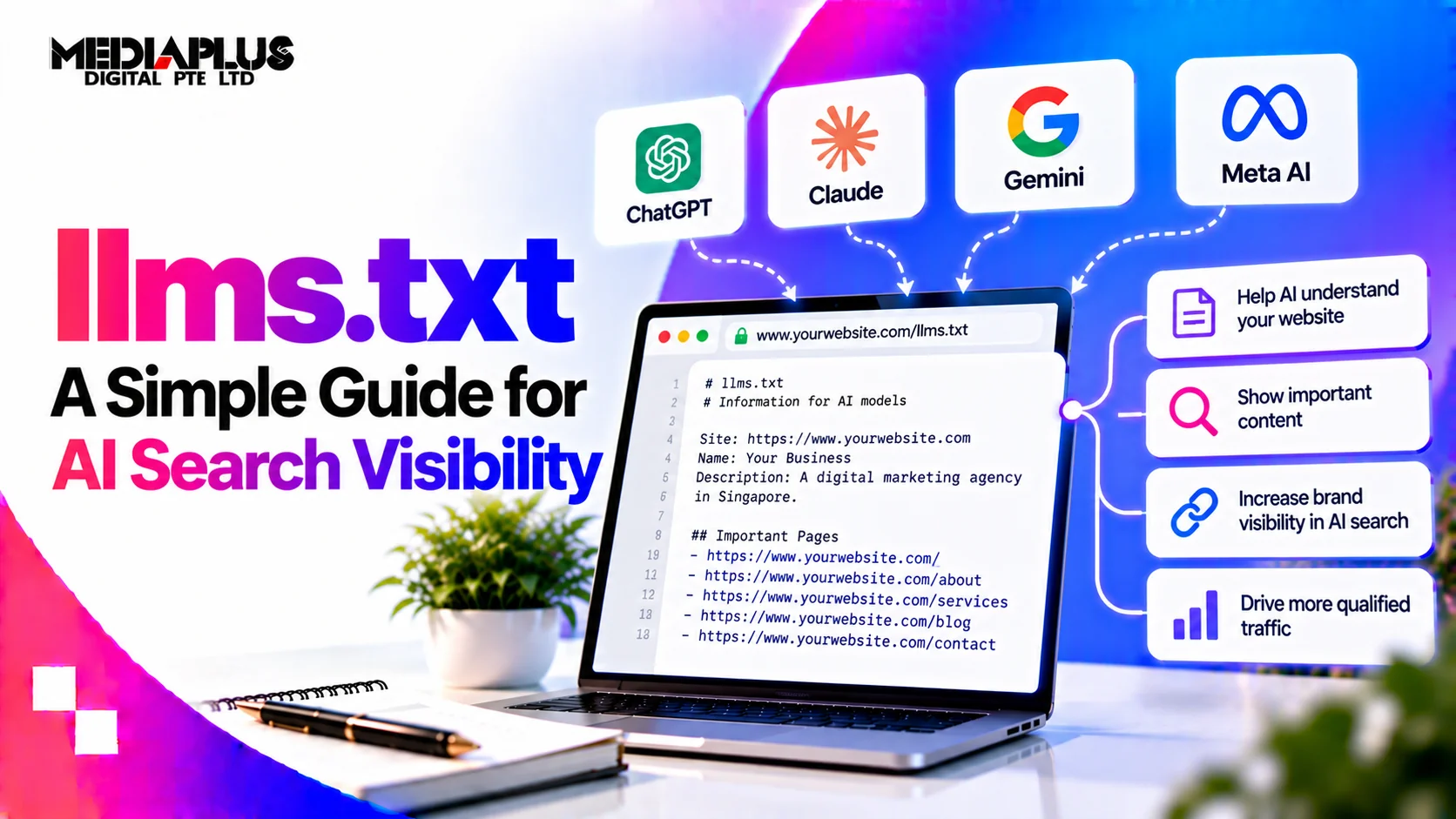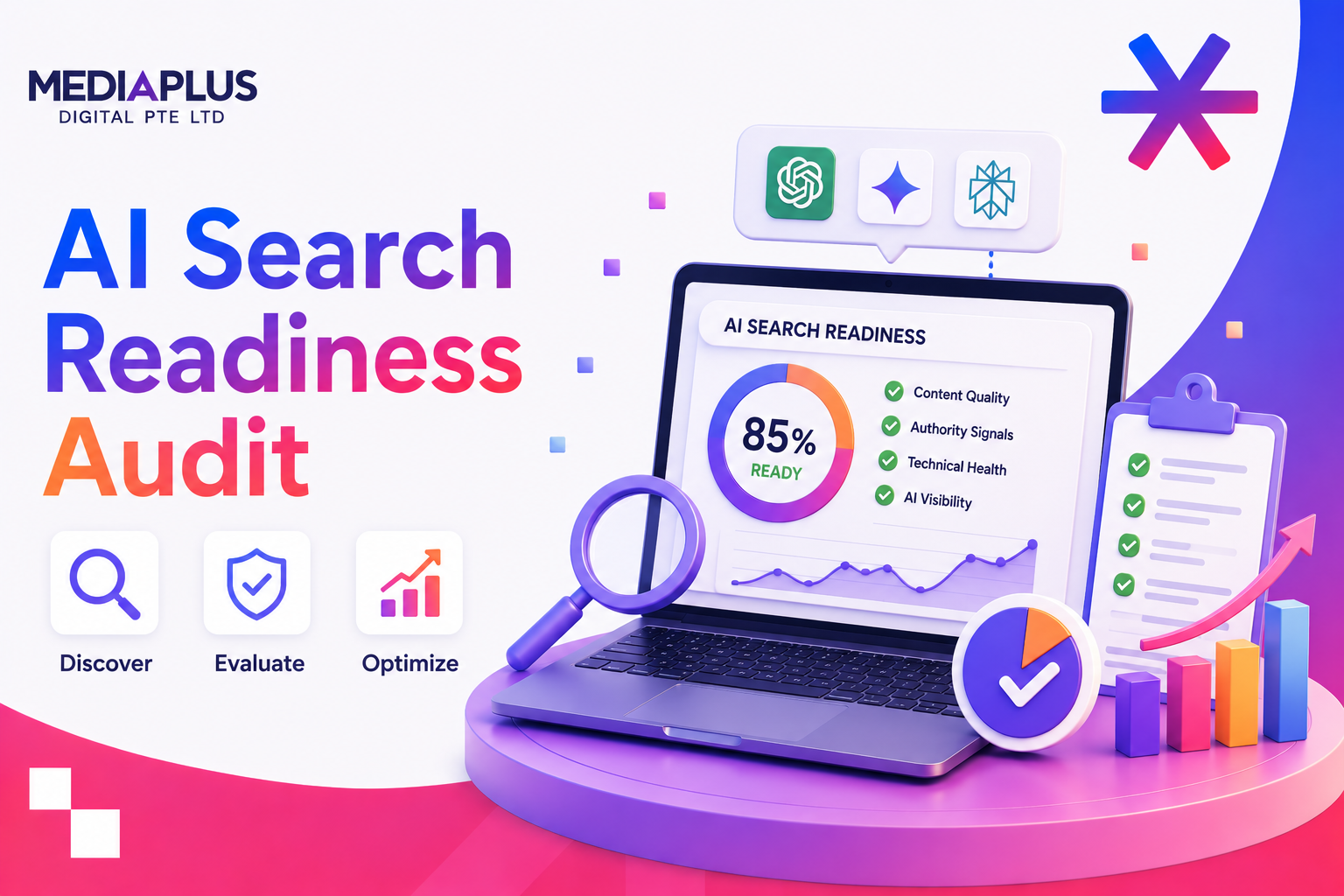
Search has changed. Instead of a list of blue links, people now get direct answers from Google AI Overviews, ChatGPT, Perplexity, and Gemini, and those answers cite only a handful of sources. AI search readiness is how prepared your website is to be one of them. If AI tools cannot understand, trust, and quote your content, your brand disappears from the answer, even if you rank on page one. This guide explains what AI search readiness is, why it matters in 2026, and a practical checklist to get ready.
What is AI search readiness?
AI search readiness is how well your content is structured and trusted so AI systems will cite your brand in their answers. It brings together a few related ideas:
- AEO (Answer Engine Optimization) makes your content easy to extract as a direct answer in tools like ChatGPT and voice search.
- GEO (Generative Engine Optimization) focuses on being cited in AI summaries like Google AI Overviews.
- AIO (AI Optimization) is the broader, ongoing work of making AI systems consistently understand, trust, and recommend your brand.
The common thread: you are now writing for two audiences, the traditional ranking algorithm and the AI systems that read your page, pull out a claim, and decide whether to put your name in the answer.
Why AI search readiness matters in 2026
- AI answers now sit above traditional results for a large and growing share of searches, so ranking first is no longer enough to get the click or the mention.
- The new benchmark is Share of Voice in AI Responses: the percentage of AI answers for your target queries that actually cite your brand. It is the new “position one”.
- Traditional SEO still powers AI visibility, since AI models use live web search to find and cite sources. Doing both together is the only sensible approach.
Ignore this and a competitor with weaker rankings but better AI readiness can end up being the brand the AI recommends.
The AI search readiness checklist
Work through these to make your content quotable, trusted, and citable by AI.
Content structure
- Lead with the answer. Put a direct, complete answer in the first two to three sentences of each section, an “answer capsule” of roughly 40 to 80 words.
- Use short sections with clear, descriptive headers that match real questions.
- Add tables for comparisons and numbered steps for processes, which AI lifts easily.
- Include an FAQ that answers the questions people actually ask.
- Match the wording of real user queries, not internal jargon.
Trust and quality
- Increase fact density. Use specific numbers, named studies, and dated claims instead of vague generalisations, since models prefer concrete facts.
- Show E-E-A-T: author names, credentials, and real expertise on the page.
- Cite authoritative sources and, where you can, publish original data. Perplexity in particular rewards this.
- Keep content fresh. Update regularly, since AI tools tend to cite newer pages.
Technical and schema
- Add FAQ, HowTo, and Service schema so AI can extract and attribute your content accurately.
- Use Organisation and Author schema to reinforce who you are.
- Keep your brand and entity information consistent across the web.
- Make sure the page is fast, crawlable, and indexable, since AI readiness sits on top of solid SEO.
Platform notes
- For ChatGPT, use clear bullet points and FAQs, which are often lifted word for word.
- For Perplexity, prioritise authoritative sources and original data, since it always cites.
- For Google AI Overviews, use FAQ and HowTo schema, short definitions, and helpful visuals.
How to measure your AI search readiness
You cannot improve what you do not measure. Start here:
- Audit your current AI visibility. Query ChatGPT, Gemini, and Perplexity with the prompts your customers would actually use. Note which brands appear and which sources get cited.
- Track Share of Voice in AI Responses. Measure how often your brand is cited for your target queries, and watch it over time.
- Watch referral traffic from AI tools in your analytics, which is a growing source for many sites.
Repeat the audit regularly, since AI answers change as models and content update.
How to get started
- Fix your SEO foundation first. AI visibility rides on traditional SEO, so a fast, crawlable, well-structured site comes first.
- Rewrite key pages answer-first. Add answer capsules, clear headers, tables, and FAQs to your most important pages.
- Add the schema. FAQ, HowTo, and Organisation schema help AI understand and attribute your content.
- Build authority and freshness. Earn mentions, publish original data, and keep content current.
- Measure and repeat. Audit your AI visibility, track share of voice, and refine.
Frequently asked questions
What is AI search readiness?
It is how prepared your website is to be understood, trusted, and cited by AI search tools like Google AI Overviews, ChatGPT, and Perplexity. It combines AEO, GEO, and broader AI optimisation.
What is the difference between SEO, AEO, and GEO?
SEO ranks you in traditional results. AEO makes your content easy to extract as a direct answer. GEO focuses on being cited in AI-generated summaries. They overlap, and the best results come from doing all three.
Do I still need traditional SEO?
Yes. AI tools use live web search to find sources, so strong SEO directly powers AI visibility. AI readiness sits on top of good SEO, not instead of it.
How do I know if AI tools cite my brand?
Query ChatGPT, Gemini, and Perplexity with your customers’ questions and see whether your brand and site appear. Track how often you are cited over time as your share of voice.
How long does it take to see results?
Some changes, like answer-first content and schema, can be picked up within weeks. Building the authority and freshness that AI trusts takes months of consistent work.
Final thoughts
AI search readiness is the new front line of visibility. The brands that win in 2026 are the ones AI understands, trusts, and quotes, which comes from answer-first content, high fact density, clear schema, real authority, and a solid SEO foundation underneath. Rankings still matter, but being the source the AI cites is what increasingly drives attention and traffic.
If you want to get your site ready for AI search, our GEO and AI search team optimises content, structure, and schema for AI Overviews and answer engines, alongside your SEO. Talk to MediaPlus Digital and claim a free RM300 audit of your AI and search visibility.