Quick answer: To improve a web page’s rankings, make it the best, most relevant answer for the search, on a fast, technically sound, and trusted page. In practice that means matching search intent, improving the content and on-page elements, strengthening internal and external links, fixing technical issues like speed and mobile, and building the experience and E-E-A-T that Google rewards. Start with the pages already close to page one, where small improvements pay off fastest.
This guide walks through exactly how to do it, step by step.
How Google ranks pages (the three principles)
Before the steps, understand what Google is judging. Rankings come down to three things:
- Relevance: how well your page matches what the searcher wants.
- Authority: how trusted your page and site are, mainly through links and reputation.
- User experience: how fast, usable, and satisfying the page is.
Every tactic below strengthens one of these. Google also weighs E-E-A-T (Experience, Expertise, Authoritativeness, Trustworthiness), especially for topics that affect money or wellbeing.
Step 1: Diagnose the page first
Do not guess. Open Google Search Console and look at the page’s queries, average position, impressions, and click-through rate.
- A page at position 8 to 20 with impressions is a “striking distance” page, close to page one, where small changes pay off fastest. Prioritise these.
- A page with high impressions but low CTR usually needs a better title and meta description.
- A page with no impressions may have an intent, indexing, or authority problem.
Make a shortlist of your top 15 to 20 pages to re-optimise. Working on pages that already get some traffic lifts results faster than starting from scratch.
Step 2: Match search intent
This is the most common reason a page will not rank. Search your target keyword and look at what already ranks:
- Are the results how-to guides, listicles, product pages, or comparisons?
- Is the intent informational, commercial, or transactional?
If the top results are guides and your page is a sales pitch, no amount of optimisation will fix the mismatch. Reshape the page to give searchers the format and answer they actually want.
Step 3: Improve the content
Google rewards the best answer, not just any answer. Make your content:
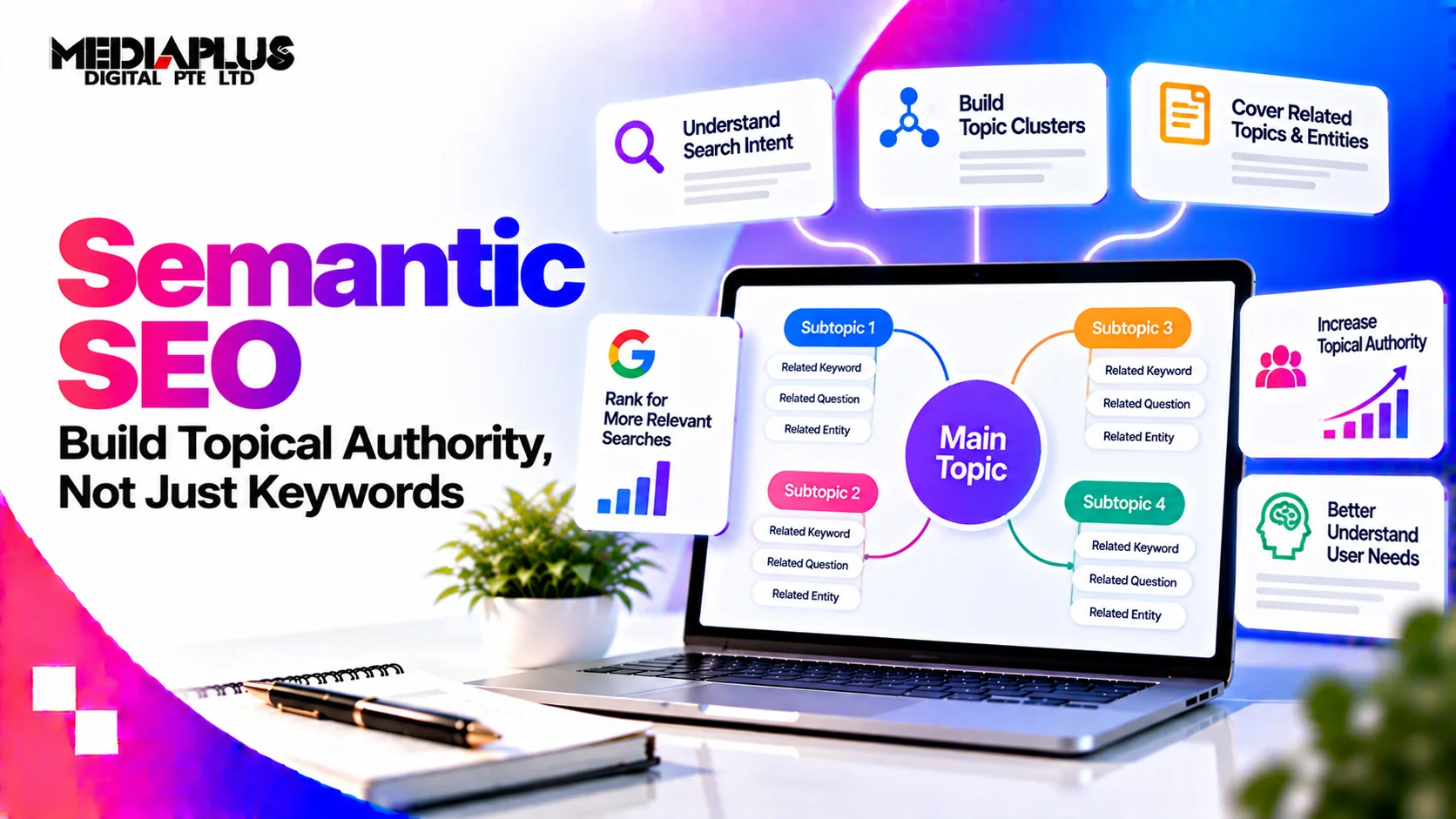
- More complete: cover the subtopics and the questions people also ask, so the page fully satisfies the search.
- More useful: add depth, examples, data, and practical steps.
- More current: refresh outdated information, stats, and screenshots, and update the date.
- Experience-backed: show real expertise and first-hand experience (E-E-A-T), with author information and sources.
Updating and expanding an existing page is one of the fastest ways to lift its ranking.
Step 4: Optimise the on-page elements
Tighten the signals on the page itself:
- Title tag: put the primary keyword near the front, keep it around 50 to 60 characters, and make it compelling.
- Meta description: 150 to 160 characters that earn the click (it lifts CTR, which helps).
- Headings: one clear H1, logical H2s and H3s, keywords where natural.
- URL: short, readable, and keyword-relevant.
- Images: compressed, correctly sized, with descriptive alt text.
- Keyword use: natural, including in the opening paragraph, with related terms and synonyms, never stuffed.
Step 5: Improve click-through rate
At the same position, a better title and meta description win more clicks, which brings more traffic and can support the ranking. Add a benefit, a number, the year, or a power word, and make sure the title matches intent. Small CTR gains across many pages add up.
Step 6: Strengthen internal linking
Internal links pass authority and help Google understand a page’s importance.
- Link to the target page from other relevant, strong pages on your site.
- Use descriptive anchor text (the keyword or a close variant), not “click here”.
- Make sure important pages are only a few clicks from the home page.
Internal linking is a lever you fully control, and it is often underused.
Step 7: Build authority with backlinks
For competitive terms, you need external authority. Earn links from relevant, reputable sites:
- Create link-worthy content (data, guides, tools, original research).
- Guest posts and genuine industry participation.
- Digital PR and outreach.
- Reclaim mentions and fix broken links pointing to competitors.
Quality and relevance beat quantity. A few links from trusted, on-topic sites outweigh many spammy ones, and buying low-quality links can hurt you.
Step 8: Fix the technical basics
A great page will not rank if it is slow, broken, or not indexable. Check:
- Speed and Core Web Vitals: aim for LCP under 2.5s, INP under 200ms, CLS under 0.1. Compress images, cache, minify code, and use good hosting.
- Mobile-friendliness: most searches are on a phone, and Google indexes mobile-first.
- HTTPS across the site.
- Crawlability: robots.txt allows important pages, the XML sitemap is submitted, and nothing important is noindexed.
- No broken links or redirect chains.
Step 9: Add schema and win SERP features
Structured data (FAQ, Article, Product, Review) helps Google understand your page and can win rich results. Answer-first content helps you capture featured snippets and appear in AI Overviews, both of which lift visibility above the standard results. These are some of the easiest visibility wins available.
Step 10: Strengthen local signals (if relevant)
For local businesses, ranking also depends on local signals: an optimised, active Google Business Profile, a steady flow of reviews, and consistent NAP citations. These lift you in the map pack and local searches. See our local SEO service.
Step 11: Track, refine, and keep going
SEO is ongoing. After making changes, give them a few weeks, then recheck Search Console for position, clicks, and CTR. Google updates its systems constantly, so keep refreshing content, earning links, and improving the pages closest to breaking through. Consistency beats one-off effort.
Common mistakes that hold rankings back
- Ignoring search intent, the top reason pages fail.
- Thin or outdated content that does not beat the competition.
- Weak titles and meta descriptions, losing clicks.
- No internal links to the page.
- Slow, non-mobile pages.
- Chasing low-quality backlinks.
- Giving up too soon, before changes take effect.
Frequently asked questions
How do I improve my Google rankings?
Diagnose the page in Search Console, match search intent, improve and update the content, optimise the title, meta, headings, and URL, add internal links, build quality backlinks, and fix technical issues like speed and mobile. Start with pages already close to page one.
How long does it take to improve rankings?
Usually a few weeks to a few months. Striking-distance pages (positions 8 to 20) can move quickly with small improvements; competitive terms take longer and need content and authority work.
What is the fastest way to improve a page’s ranking?
Re-optimise pages already ranking in striking distance: refresh the content, sharpen the title and meta, add internal links, and match intent. These usually move to page one fastest.
Do backlinks still matter in 2026?
Yes, especially for competitive terms. Quality, relevant backlinks build the authority Google trusts. But they only work on a page that is well-optimised and matches intent.
Does page speed affect rankings?
Yes. Core Web Vitals are a ranking signal, and faster pages keep visitors and convert better. A slow page caps everything else you do.
Why is my page not ranking at all?
Usually an intent mismatch, thin content, weak on-page optimisation, no authority, or a technical issue (slow, blocked, or not indexed). Diagnose with Search Console and work through the steps above.
The bottom line
Improving your web page rankings is not a trick; it is giving searchers the best, most relevant answer on a fast, trusted, well-optimised page. Start with the pages closest to page one, match intent, improve the content and on-page signals, build internal and external authority, fix the technical basics, and keep refining. Do that consistently and your pages climb, and stay there.
Want an expert team to lift your rankings? Talk to MediaPlus Digital about our SEO services and claim a free RM300 SEO audit.