What is on-page SEO?
On-page SEO (also written onpage SEO, or on-page optimisation) is the practice of optimising individual web pages, their content, HTML elements, and structure, so search engines can understand and rank them, and so AI systems can extract and cite them. It is everything you do on the page itself to rank higher, as opposed to off-page SEO (things you do elsewhere, like links) and technical SEO (the site’s infrastructure).
In 2026, on-page SEO matters more than ever, because Google’s AI Overviews and AI Mode are built on the same ranking and quality systems as classic search. Well-structured, trustworthy on-page content is exactly what both Google and AI assistants pull answers from. This guide explains the core elements, gives you a full checklist, and covers what changed for 2026.

On-page vs off-page vs technical SEO
These three work together but are different jobs.
|
Type |
What it is |
Examples |
|
On-page SEO |
Optimising the page’s content and elements |
Title tags, headings, content, internal links, images, schema |
|
Off-page SEO |
Building authority from outside the site |
Backlinks, brand mentions, reviews |
|
Technical SEO |
The site’s infrastructure and crawlability |
Speed, indexing, sitemaps, HTTPS, structure |
On-page SEO is the part you have the most direct control over, which makes it the best place to start.
Why is on-page SEO important?
- It tells Google what your page is about, so it ranks for the right searches.
- It matches search intent, so visitors find what they wanted and stay.
- It feeds AI answers, since AI Overviews and chatbots cite clear, well-structured pages.
- It lifts every other effort, because links and traffic are wasted on a page that is not optimised.
Get on-page SEO right and everything else works harder.

The core on-page SEO elements
The factors group into four areas. Cover all four and your pages are genuinely optimised.
1. Content and search intent
- Match the search intent. Know whether the searcher wants information, a comparison, or to buy, and give them exactly that.
- Create genuinely useful, original content that answers the query fully and better than the competition.
- Use your target keyword and related terms naturally, including in the first paragraph, without stuffing.
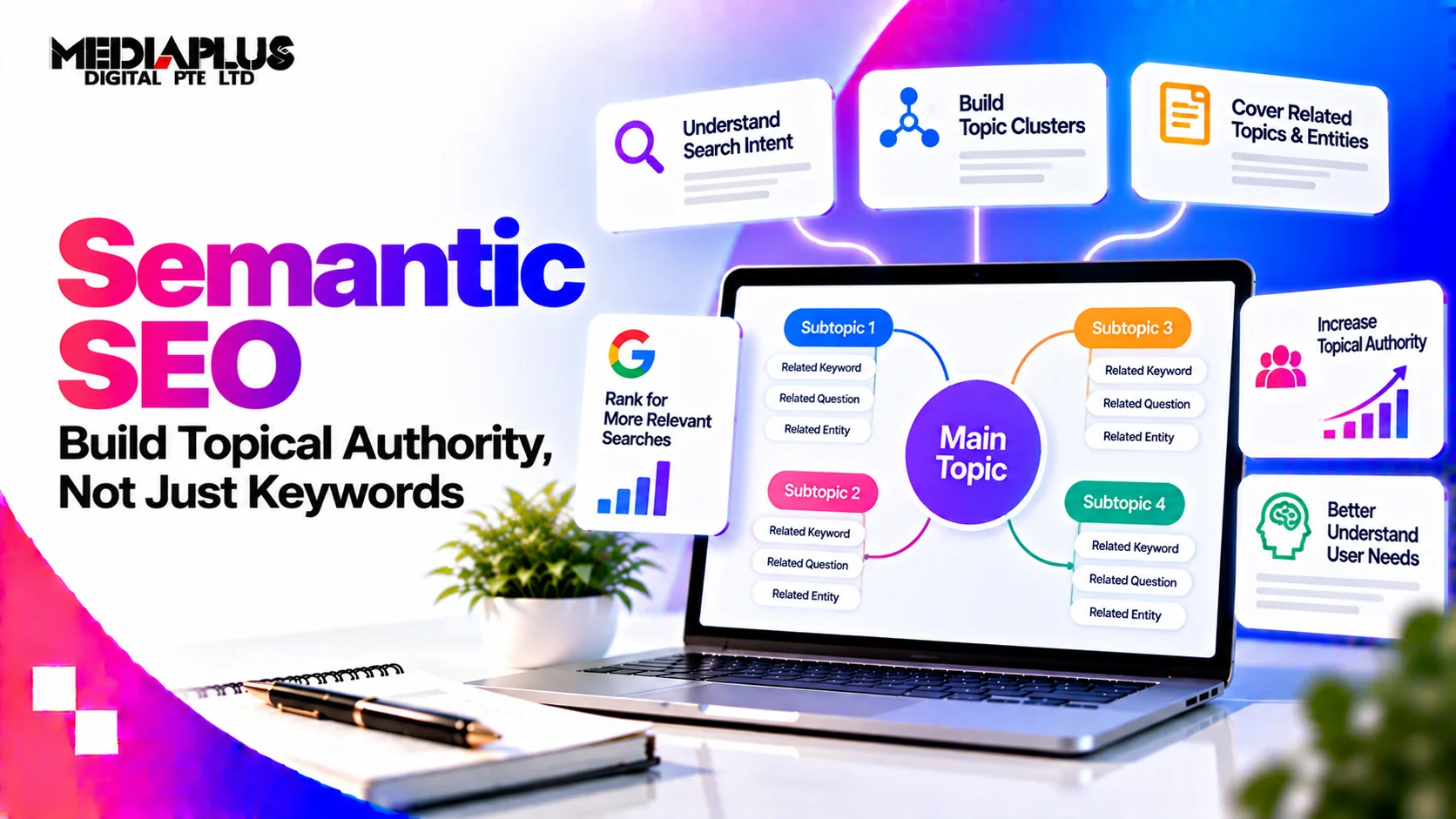
- Cover the topic in depth, including the questions people also ask, so you build topical authority.
2. HTML and on-page elements
- Title tag: unique, compelling, with the target keyword near the front.
- Meta description: a clear, benefit-led summary that earns the click (it does not rank you, but it lifts CTR).
- Headings (H1 to H3): one clear H1, logical subheadings, keywords where natural.
- URL: short, readable, keyword-relevant (for example /on-page-seo/ not /page?id=482).
- Image optimisation: compressed images with descriptive alt text.
- Schema markup: structured data (FAQ, Article, Product, Review) so Google and AI read your page accurately and you win rich results.
3. Links
- Internal links: link to related pages with descriptive anchor text, to spread authority and help users.
- External links: link to credible sources where useful, which supports trust.
4. Page experience
- Speed and Core Web Vitals: aim for Largest Contentful Paint under 2.5 seconds, Interaction to Next Paint under 200 milliseconds, and Cumulative Layout Shift under 0.1.
- Mobile-friendliness: the page must work perfectly on a phone.
- Readability and layout: short paragraphs, clear structure, and no intrusive pop-ups.
- E-E-A-T signals: show experience and expertise (author info, sources, credentials), which Google and AI weigh heavily.
The on-page SEO checklist (2026)
Work through this for every important page.
- The page targets a clear keyword and search intent
- The target keyword is in the title tag, near the front
- The title is compelling and under about 60 characters
- The meta description is clear, benefit-led, and earns the click
- There is one clear H1, with logical H2 and H3 subheadings
- The URL is short, readable, and keyword-relevant
- The content fully answers the query and covers related questions
- The keyword and related terms appear naturally, including early on
- Images are compressed and have descriptive alt text
- Relevant internal links are added with descriptive anchor text
- Credible external links are added where useful
- Schema markup is in place (FAQ, Article, Product, or Review)
- The page loads fast and passes Core Web Vitals
- The page is mobile-friendly and easy to read
- Author and expertise (E-E-A-T) signals are present

On-page SEO for AI search (new for 2026)
AI Overviews, ChatGPT, and Perplexity answer questions by pulling from well-structured, trustworthy pages. Good on-page SEO is what makes your page quotable by AI:
- Answer-first structure: lead sections with a clear, direct answer AI can lift.
- Clear headings and FAQs that map to real questions.
- Schema and clean formatting so machines parse your content.
- Strong E-E-A-T, because AI favours sources it can trust.
Google itself says SEO best practices still apply to its AI features, since they are rooted in core Search. Optimising your pages for people and search engines is also how you get cited by AI. For more, see our AI SEO and GEO service.
Common on-page SEO mistakes to avoid
- Keyword stuffing instead of writing naturally.
- Duplicate or thin content that does not fully answer the query.
- Weak or missing title tags and meta descriptions.
- No internal links, so pages sit isolated.
- Ignoring page speed and mobile, which quietly caps your rankings.
- No schema, missing easy rich-result and AI-citation wins.
Frequently asked questions
What is on-page SEO in simple terms?
On-page SEO is optimising a web page itself, its content, title, headings, URL, images, internal links, and structure, so search engines rank it and AI can cite it. It is the part of SEO you control directly on the page.
What is the difference between on-page and off-page SEO?
On-page SEO is what you do on the page (content, titles, headings, internal links, schema). Off-page SEO is what you build outside it (backlinks, mentions, reviews). Both are needed, but on-page is where you have the most control.
What are the most important on-page SEO factors?
Search intent, high-quality content, the title tag, headings, internal links, URL structure, image alt text, page speed and Core Web Vitals, mobile-friendliness, schema markup, and E-E-A-T signals.
Is on-page SEO still relevant with AI search?
Yes, more than ever. AI Overviews and chatbots pull answers from well-structured, trustworthy pages, which is exactly what on-page SEO produces. Google confirms SEO best practices still apply to its AI features.
How do I check my on-page SEO?
Run each page against the checklist above, and use tools like Google Search Console and an SEO auditor to find issues with titles, headings, speed, and structure.
Final thoughts
On-page SEO is the foundation of ranking on Google and getting cited by AI. It comes down to matching search intent with genuinely useful content, optimising the on-page elements, linking well, and delivering a fast, trustworthy page experience. Work through the checklist for every important page, and you give every other part of your SEO a solid base to build on.
Want your pages optimised properly, for Google and AI? Talk to MediaPlus Digital about SEO services and claim a free RM300 SEO audit.