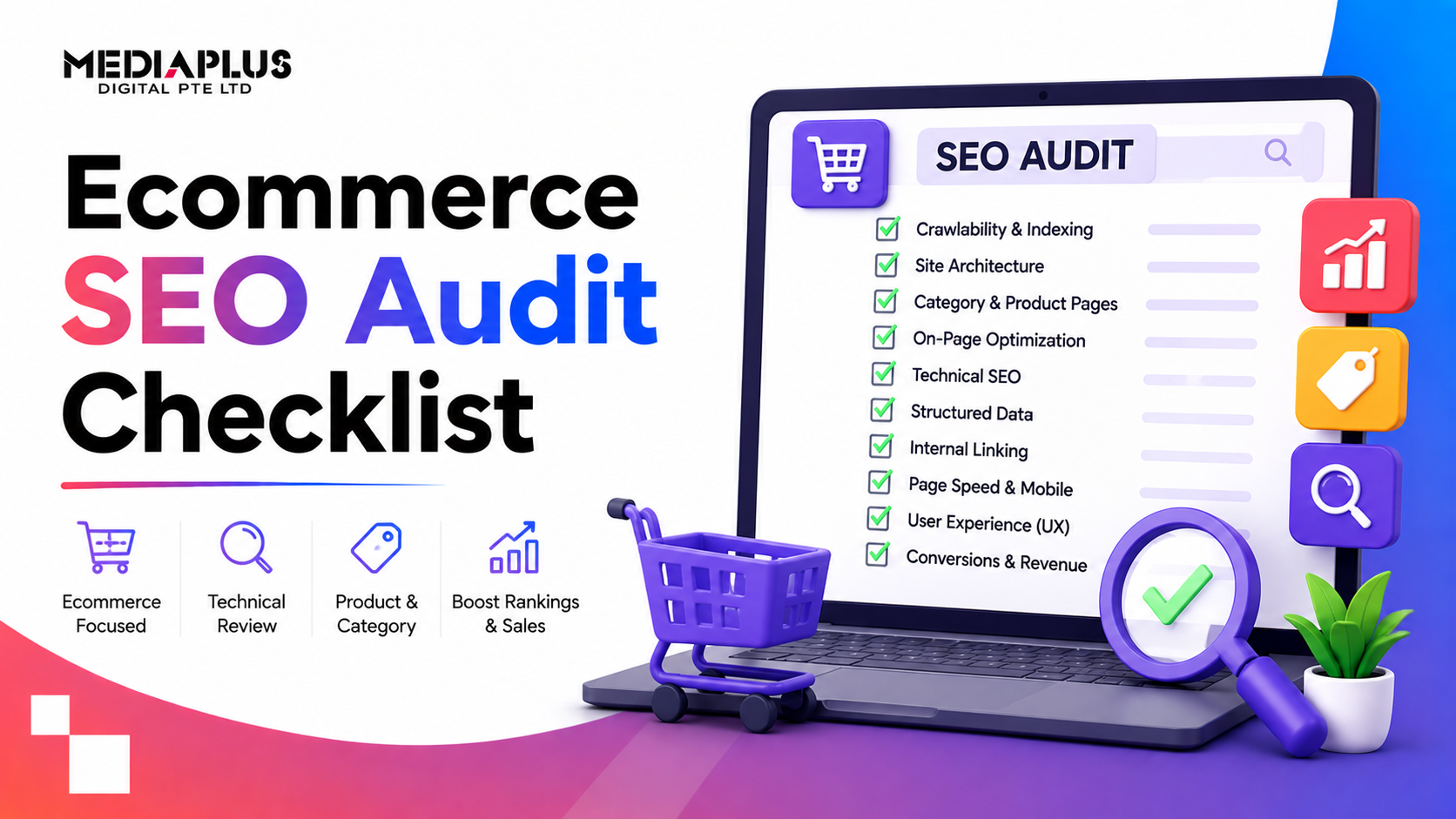
Most online stores leak traffic they could win for free. Product pages that no one can find, category pages with thin content, a site so slow that Google and shoppers both give up. This ecommerce SEO checklist walks through what to fix, in order, so your store ranks and sells. Work through it top to bottom, or hand it to your developer.
How to use this checklist
SEO for ecommerce has more moving parts than a normal site: hundreds of product and category pages, filters, and a checkout to protect. Fix the foundations first (technical and architecture), then pages, then content and authority. Tick each item off as you go.
1. Technical SEO foundations
- Your site loads fast on mobile (aim for good Core Web Vitals). Speed is both a ranking factor and a conversion factor.
- The site is secure with HTTPS across every page.
- The site is mobile-first and fully responsive.
- You have an XML sitemap submitted in Google Search Console.
- Your robots.txt allows important pages and blocks admin, cart, and checkout.
- No important pages are accidentally set to noindex.
- Faceted navigation and filters are handled so they do not create thousands of duplicate URLs.
- Out-of-stock and discontinued products are handled properly (keep, redirect, or return the right status).
2. Site architecture
- Your structure is shallow: home to category to product in as few clicks as possible.
- Categories and subcategories map to how people actually search.
- Every product is reachable through internal links, not just search or filters.
- Breadcrumbs are in place and marked up with schema.
- URLs are short, readable, and keyword-relevant (for example /mens-running-shoes/ not /cat?id=482).
3. Keyword research for ecommerce
- Category pages target broad commercial terms (for example “running shoes”).
- Product pages target specific terms (brand, model, variant).
- You have mapped keywords to the right page type so pages do not compete with each other.
- You target buying-intent keywords (“buy”, “best”, “price”), not just informational ones.
4. On-page: category pages
- Each category has a unique, keyword-relevant title tag and meta description.
- One clear H1 per page.
- Category pages have genuine intro or supporting content, not just a grid of products.
- Internal links point to key subcategories and related categories.
5. On-page: product pages
- Unique product titles and descriptions. Never paste the manufacturer’s copy across the web.
- Descriptions answer real buyer questions (sizing, materials, use, care).
- High-quality images with descriptive alt text.
- Product schema (price, availability, rating) so you can win rich results.
- Customer reviews on the page, marked up with review schema.
- Clear, visible calls to action and trust signals (returns, shipping, payment).
6. Content and topical authority
- A blog or guides section that answers buyer questions and captures informational searches.
- Buying guides that link to relevant category and product pages.
- Content targets the questions people ask before buying your products.
- Internal links connect content to the money pages.
7. Off-page and authority
- You are earning links from relevant sites, media, and suppliers.
- Your brand is mentioned and cited across the web.
- Product feeds are set up for Google Shopping to complement organic.
8. Local and marketplace (if relevant)
- If you have a physical store, your Google Business Profile is optimised.
- Marketplace listings (where you sell on them) do not cannibalise your own store’s brand terms.
9. Measurement
- Google Search Console and Analytics are set up and tracking.
- You track rankings for key category and product terms.
- You track organic revenue, not just traffic.
- You review and refresh underperforming pages regularly.
Common ecommerce SEO mistakes to avoid
- Duplicate product descriptions copied from the manufacturer or across variants.
- Thin category pages that are just a product grid with no content.
- Filters creating endless duplicate URLs that waste crawl budget.
- Deleting old product pages without redirecting them, losing their link equity.
- Ignoring site speed, which quietly costs you rankings and sales.
Frequently asked questions
What is ecommerce SEO?
Ecommerce SEO is optimising an online store to rank in search, covering technical health, site architecture, category and product pages, content, and authority, so shoppers find your products through organic search.
How long does ecommerce SEO take?
Expect early movement in about three months and stronger results in six to twelve, depending on your competition, site size, and starting point.
What matters most for ecommerce SEO?
Fast, technically healthy pages; a clean site architecture; unique, useful product and category content; product schema and reviews; and authority. Fix foundations before chasing links.
Do product descriptions really need to be unique?
Yes. Duplicate descriptions copied from manufacturers or across your own variants are one of the most common reasons product pages fail to rank.
Turn this checklist into results
Working through this will move your rankings, but it is a lot of ongoing work. If you would rather have specialists handle it, our ecommerce SEO team optimises stores end to end, and our ecommerce development team builds SEO in from the start.
Talk to MediaPlus Digital for a free RM300 ecommerce SEO audit.