Quick answer: Web development is the work of building and maintaining websites and web applications, from writing the code that makes them run to keeping them fast, secure, and working over time. It splits into three areas: front-end (what users see), back-end (the server, data, and logic behind the scenes), and full-stack (both). If web design is how a site looks, web development is how it works.
This guide explains what web development is, how it works, its types, the languages and tools involved, the process, how to become a developer, and what it costs in Malaysia.
What is web development?
Web development is the process of creating, building, and maintaining websites and web applications. It covers everything behind what you see on screen: the structure, the code, the database, and the connections that let a site load, take a form, process a payment, or run a full web app.
A website is not a one-off project; like a car, it needs building well and then servicing. Web development covers both: getting it built right, and keeping it fast, secure, and up to date.

Why web development matters for your business
Your website is often the first thing a customer checks, and how well it is built decides whether they stay or leave. Good web development gives you:
- Speed: fast pages that keep visitors and help SEO (see Core Web Vitals).
- Reliability: a site that works on every device and does not break under load.
- Functionality: forms, bookings, payments, logins, and integrations that actually work.
- Security: protection for your data and your customers’.
- Room to grow: a foundation you can build on as your business expands.
The main types of web development
Web development splits into three areas. Most real projects use all three.
Front-end development
The front end is everything users see and interact with: layout, menus, buttons, and content. Front-end developers use HTML, CSS, and JavaScript, often with frameworks like React, Vue, or Angular, to turn a design into a working, responsive interface.
Back-end development
The back end is everything that happens behind the scenes: storing data, running business logic, user authentication, and talking to other systems through APIs. Back-end developers use languages like PHP, Python, Java, or Node.js, plus databases, to power the features users rely on without ever seeing the code.
Full-stack development
Full-stack developers work across both the front end and the back end. They can build a feature end to end, from the interface down to the database, which makes them valuable on smaller teams and complex projects alike.
Key languages and tools
Web development in 2026 draws on a broad toolkit:
- Front end: HTML, CSS, JavaScript, TypeScript, and frameworks like React, Vue, and Angular.
- Back end: PHP, Python, Java, and Node.js (JavaScript is popular because it runs both in the browser and, via Node.js, on the server).
- Databases: MySQL, PostgreSQL, and similar.
- Platforms and CMS: WordPress, WooCommerce, and Shopify for many business sites.
- APIs: REST and GraphQL to connect services.
- Cloud and DevOps: AWS, Azure, or Google Cloud, with tools like Docker.
Two 2026 shifts stand out: AI is now part of the daily development workflow (helping write, test, and review code), and PWAs and cloud-native architecture are shaping how modern sites and apps are built. See our guide on what a PWA is.

Web development vs web design
They work together but are not the same.
|
Web design |
Web development |
|
|
Focus |
How the site looks and feels |
How the site works |
|
Work |
Layout, colours, branding, UX |
Coding, logic, databases, features |
|
Output |
The visual design |
The working website |
|
Tools |
Figma, design software |
Code, frameworks, databases |
A great site needs both. For a deeper look, see web design vs web development.
What does a web developer do?
A web developer turns a design and a set of requirements into a working website. Day to day that means writing and testing code, building features, connecting databases and third-party services, fixing bugs, optimising speed, and keeping the site secure. On a full project they also plan the structure, choose the right platform, and support the site after launch.
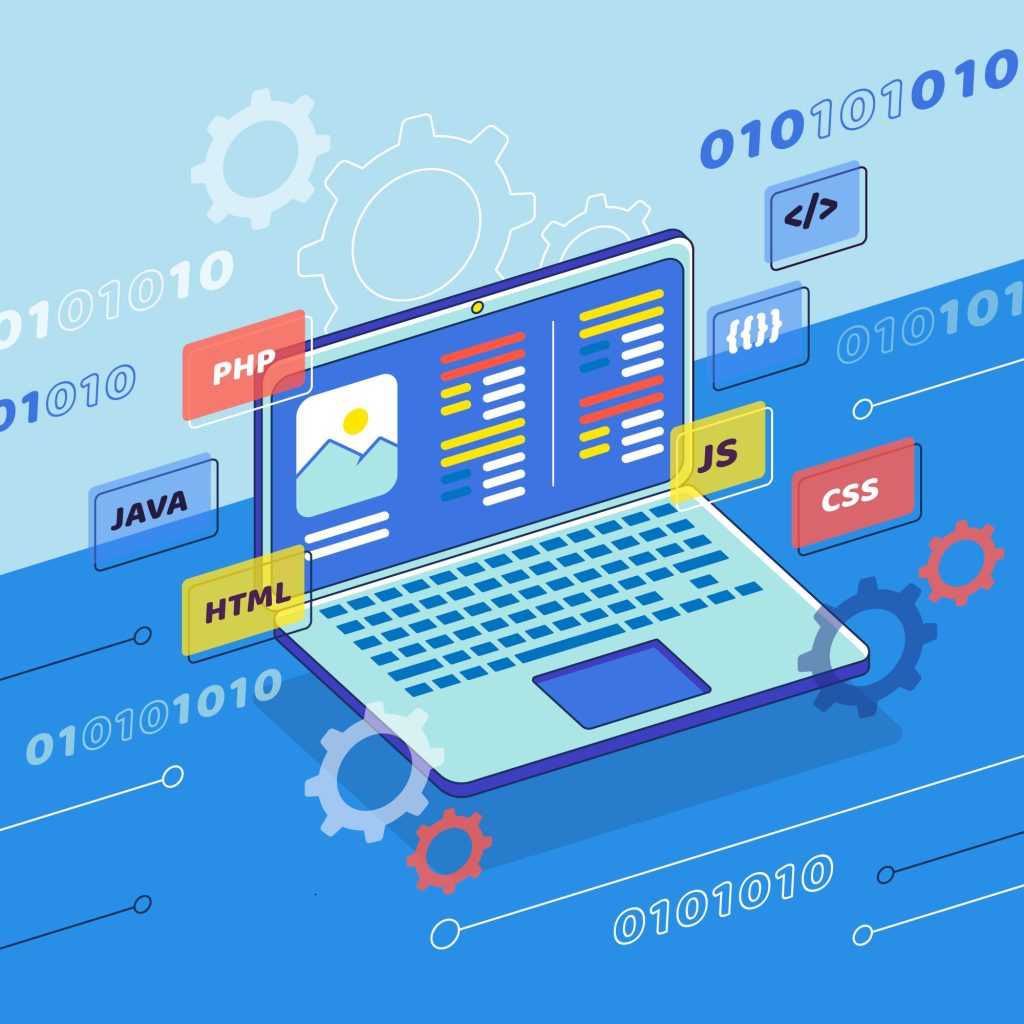
The web development process
A typical build runs through five stages:
- Discovery: goals, requirements, and the right platform are agreed.
- Design: the look and user journey are designed and approved.
- Development: the site is coded, front and back end, and features are built.
- Testing: the site is tested across devices and browsers, and bugs are fixed.
- Launch and support: the site goes live, then is maintained and improved.
Timelines vary: a simple site takes two to four weeks, a corporate site four to eight, and an ecommerce or custom build six to twelve weeks or more.
How to become a web developer
If you are considering it as a career: start with the front-end basics (HTML, CSS, JavaScript), then a framework (React), then back-end skills (Node.js or PHP, and databases) to go full-stack. Build real projects for a portfolio, and keep learning, since the tools evolve fast. For the local picture, see our web developer career and salary outlook in Malaysia.
How much does web development cost in Malaysia?
Web development is usually priced with the design as one project. As a 2026 guide, a basic business site runs RM2,500 to RM6,000, a corporate site with a CMS RM6,000 to RM15,000, and an ecommerce or custom build RM8,000 to RM30,000 or more. For a full breakdown, see our website development cost in Malaysia guide.
Frequently asked questions
What is web development in simple terms?
Web development is building and maintaining websites: writing the code, building the features, connecting the database, and keeping the site fast and secure. It is the “how it works” side of a site, as opposed to design, which is “how it looks”.
What are the main types of web development?
Front-end (what users see and interact with), back-end (the data and logic behind the scenes), and full-stack (both). Most projects use all three.
What is the difference between web development and web design?
Web design is the look, feel, and user experience. Web development is the coding that makes the site work. A good website needs both.
What languages are used in web development?
Front-end uses HTML, CSS, and JavaScript (with frameworks like React). Back-end uses PHP, Python, Java, or Node.js, plus databases like MySQL.
How long does web development take?
A simple site takes two to four weeks, a corporate site four to eight, and an ecommerce or custom build six to twelve weeks or more, depending on features.
Do I need to code to get a website built?
No. A web development agency handles the technical work; you just need your goals and requirements.
The bottom line
Web development is the technical backbone of every site that loads fast, works reliably, and turns visitors into customers. It spans front-end, back-end, and full-stack work, built through a clear process from discovery to launch. Understanding the basics helps you brief a project and choose the right partner.
Need a website built properly? Talk to MediaPlus Digital about web design and development, WordPress, or an ecommerce store, and get a free RM300 consultation.