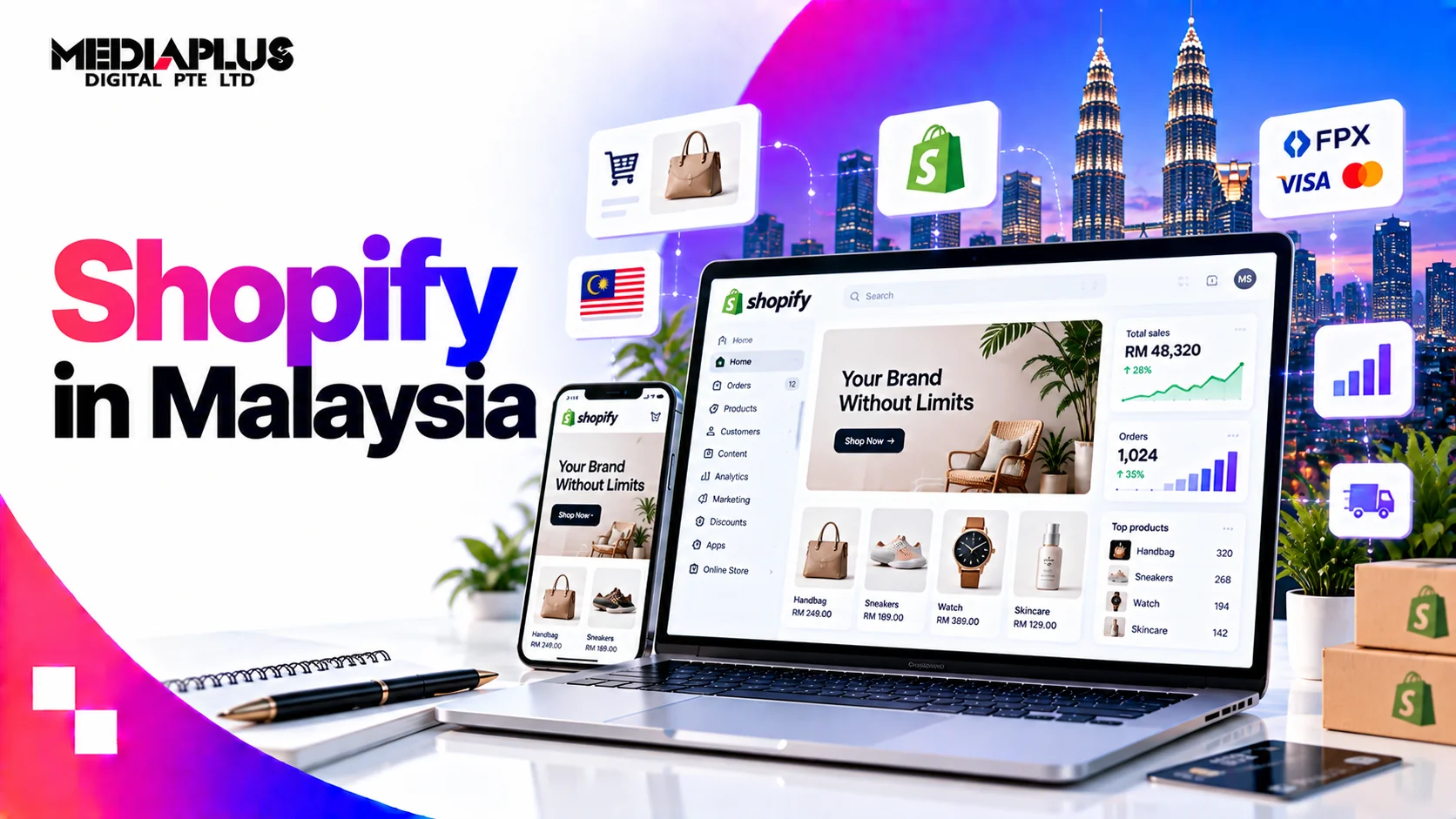
Quick answer: Shopify works in Malaysia and thousands of Malaysian brands run on it. One fact changes the whole budget: Shopify Payments is not available here. Malaysia is absent from Shopify’s own list of supported countries, checked on 23 September 2026. So you connect a Malaysian gateway instead, and Shopify charges a third party transaction fee on top of your plan: 2% on Basic, 1% on Grow, 0.6% on Advanced. That sits on top of whatever the gateway charges.
Two more costs nobody mentions. Your plan is billed in US dollars, not ringgit, and Shopify adds Malaysian SST to the bill at the prevailing 8% with no exemption available. Shopify Shipping is also unavailable in Malaysia, so buying labels inside the admin is out and you work through a courier app instead.
None of that rules Shopify out. It means the honest comparison is not “US$25 a month” against a local platform: budget the plan, the transaction fee, the gateway fee, the SST and the apps together. This page works through those numbers and ends with a year one budget in ringgit.
One thing to know before you shop for a gateway. The Malaysian market consolidated: Razer Merchant Services is now Fiuu, and both iPay88 and eGHL have been folded into NTT DATA, whose online gateway is marketed as ADAPTIS. Guides still naming all four as separate options are out of date.
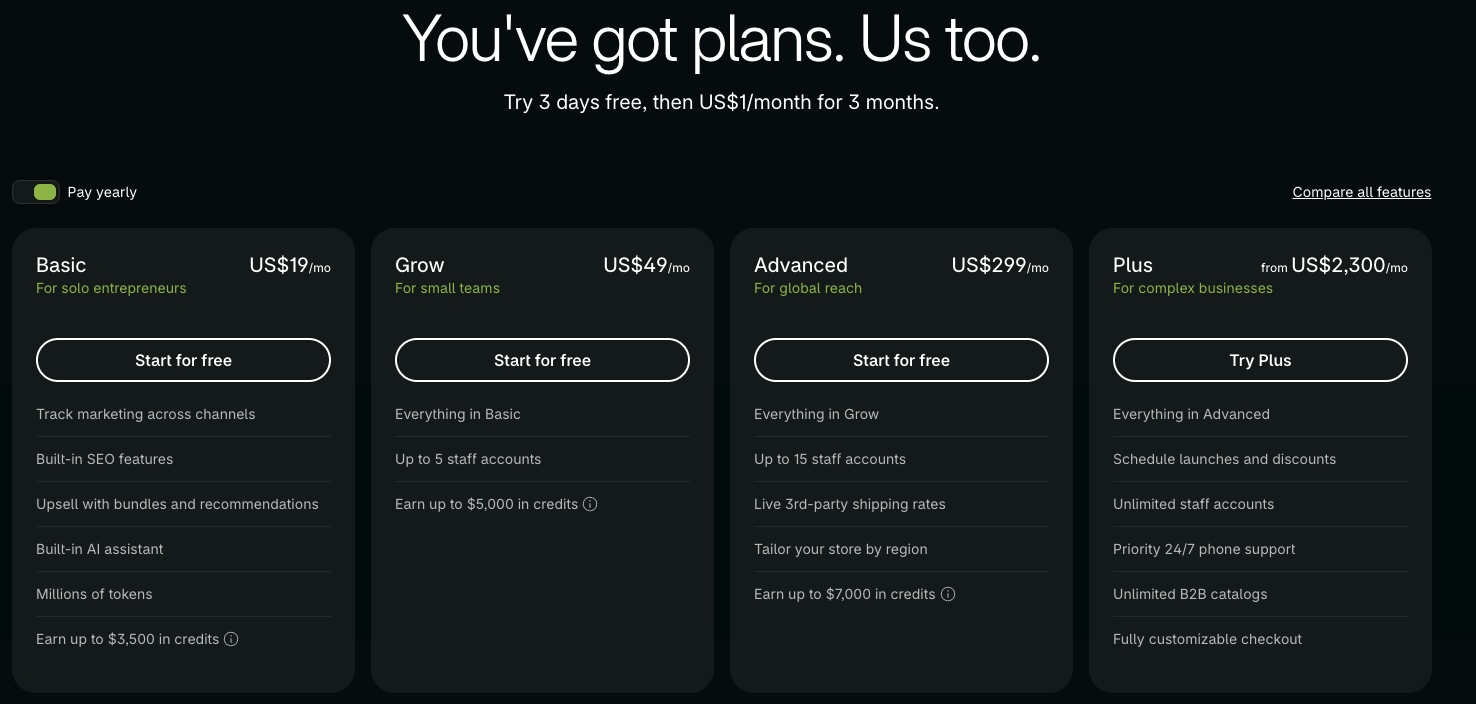
What Shopify costs a Malaysian buyer
Prices as shown on shopify.com/my on 23 September 2026, quoted in US dollars by Shopify itself. Ringgit figures use Bank Negara Malaysia’s interbank middle rate of RM4.0750 to the US dollar on the same day, so treat them as indicative.
|
Plan |
Billed monthly |
Billed yearly |
Yearly rate in RM per month |
Third party transaction fee |
|
Basic |
US$19 |
US$19 per month |
about RM77 |
2% |
|
Grow |
US$49 |
US$49 per month |
about RM200 |
1% |
|
Advanced |
US$299 |
US$299 per month |
about RM1,218 |
0.6% |
|
Plus |
from US$2,300 |
1 or 3 year terms |
about RM9,373 |
not published |
Shopify’s current offer on the Malaysian pricing page is a 3 day free trial, then US$1 a month for 3 months. There are no setup fees on any plan.
Three cost items that catch Malaysian merchants out:
- You are billed in US dollars. Shopify’s billing currencies are euros, British pounds, US dollars and Indian rupees. Ringgit is not one, so your subscription moves with the exchange rate and your card issuer may add a foreign transaction charge.
- SST is added to the bill. Shopify states that Malaysian stores are charged SST on Shopify fees and that “Currently, you can’t provide your SST number to be tax exempt.” Shopify does not publish the rate. Customs raised service tax on foreign-supplied digital services from 6% to 8% with effect from 1 March 2024 and no order has changed it since, so budget 8%.
- The transaction fee is charged on orders, not on your plan. It grows with you while the plan price stays flat.
The plan upgrade maths nobody publishes
Because the third party fee is a percentage of revenue, there is a revenue level at which a dearer plan becomes the cheaper option. On yearly billing:
|
Move |
Extra plan cost per month |
Fee saved |
Break even monthly revenue |
|
Basic to Grow |
US$30, about RM122 |
1% of sales |
about RM12,200 |
|
Grow to Advanced |
US$250, about RM1,019 |
0.4% of sales |
about RM255,000 |
A store turning over RM30,000 a month on Basic pays about RM600 a month in Shopify transaction fees. On Grow it would pay RM300, for RM122 more in plan cost, so staying on Basic costs it roughly RM178 a month for nothing. Equally, most Malaysian stores have no business on Advanced: you need about RM255,000 a month before the 0.6% rate pays for the plan.
Shopify waives the third party fee for Plus stores using Shopify Payments as their sole provider. A Malaysian Plus store cannot, so it does not get the waiver, and Shopify publishes no Plus percentage. Get it in writing before signing a Plus term.
What the Shopify Payments gap actually removes
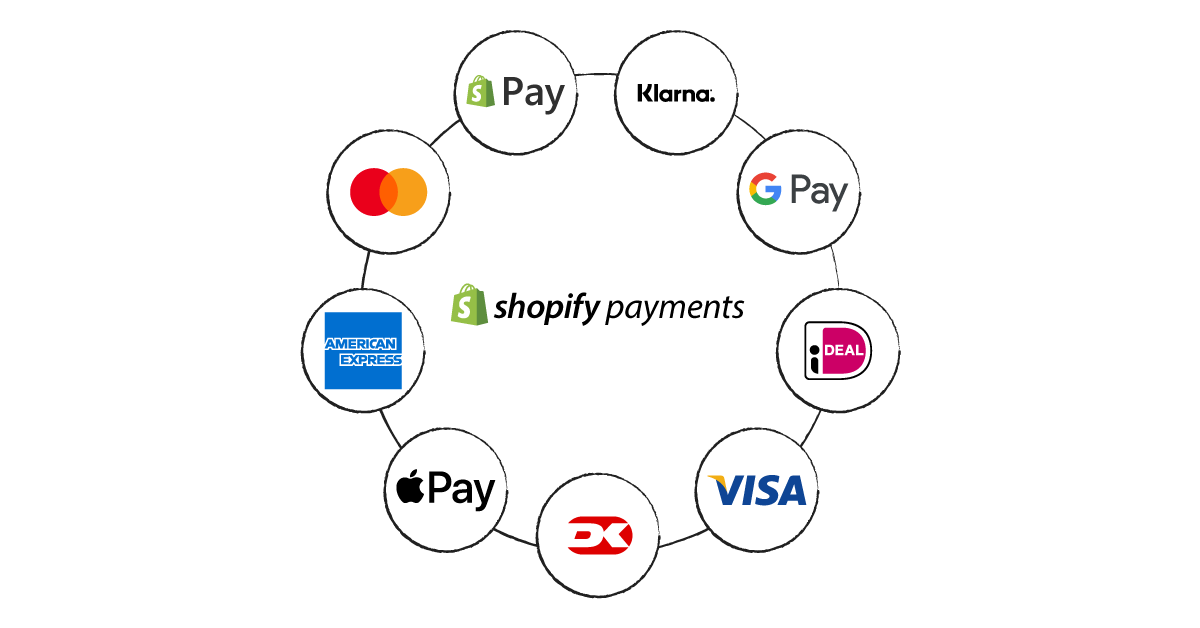
Shopify Payments is not just a card processor. Several features are built on it, and Shopify’s Malaysian pricing page marks them with an asterisk reading “Requires Shopify Payments”: showing prices in local currencies, accepting local payment methods through Shopify Markets, and estimating and collecting duties and taxes. Its documentation on local pricing is blunter: “Selling in local currencies is only supported by Adyen or Shopify Payments… Orders that are placed using other third-party payment providers are processed in your store’s default currency.”
|
You want to |
With Shopify Payments |
Malaysian store reality |
|
Price in ringgit at home |
Yes |
Yes. Set MYR as your store currency |
|
Show a Singapore visitor prices in SGD |
Automatic |
Not through Markets. Adyen is the documented alternative, and it needs existing Adyen approval |
|
Offer FPX, DuitNow QR and e-wallets |
Through local payment methods |
Through your gateway, configured by you |
|
Collect duties on an export order |
Built in |
Not available |
|
Sell subscriptions |
Shopify Payments required as primary gateway |
Not available through Shopify’s native subscriptions |
That last line matters. Shopify states that selling subscription products requires Shopify Payments as your primary gateway. If your model is a monthly box or a refill plan, Shopify in Malaysia is a poor fit until that changes.
Which payment gateways connect to Shopify
The brand landscape changed, so start here rather than with a list from 2023.
|
Provider |
Status in 2026 |
How it connects to Shopify |
Local methods it carries |
|
Fiuu |
Razer Merchant Services rebranded to Fiuu on 8 March 2024 |
Two routes: a card app inside Shopify checkout, plus a hosted offsite app for the rest |
Cards in checkout. FPX, DuitNow QR, Touch ’n Go, GrabPay, Boost, ShopeePay, MyDebit, Atome via the hosted route |
|
ADAPTIS (formerly eGHL) |
eghl.my redirects to NTT DATA’s ADAPTIS page, and Shopify’s Malaysian directory names the provider “ADAPTIS Payment Gateway (formerly eGHL)” |
Third party gateway, added in Shopify admin |
Cards, online banking, e-wallets, instalments, buy now pay later |
|
iPay88 |
Consolidated into NTT DATA Payment Services. Its site returned an error on 23 September 2026 and no iPay88 entry appears in Shopify’s Malaysian directory |
Treat ADAPTIS as the current route and confirm with NTT DATA |
See ADAPTIS |
|
Billplz |
Active and independent |
Shopify payment app, added in admin. No App Store listing |
FPX, DuitNow QR and transfer, Touch ’n Go, Boost, GrabPay, cards, Atome |
|
senangPay |
Now on DOKU infrastructure. Shopify’s directory carries a “DOKU Payment” entry and senangPay’s own Shopify guide has been removed |
Confirm the current route before committing |
FPX, e-wallets, cards, buy now pay later, instalments |
|
Curlec by Razorpay |
Active, with a documented Shopify plugin |
Razorpay Secure Payment Gateway app, connected by the account owner |
FPX, DuitNow Pay, Touch ’n Go, Boost, GrabPay, cards, Atome, Alipay+ |
|
HitPay |
Active, clearest published rate card |
Live App Store listing |
FPX, DuitNow QR, Touch ’n Go, GrabPay, ShopeePay, cards, Atome |
|
2C2P |
Active |
Live App Store listing since April 2022 |
Cards, bank instalments, Boost, Touch ’n Go, Alipay, WeChat, GrabPay. FPX and DuitNow are not listed |
|
Stripe |
Available to Malaysian businesses |
Shopify hides Stripe only where Shopify Payments exists, which is not the case here, and a Stripe entry sits in the Malaysian directory. Confirm in Settings then Payments |
Cards only |
|
PayPal |
Available |
PayPal Express Checkout, built in |
Cards and PayPal balances. No FPX, no DuitNow |
|
Revenue Monster |
Active as a provider |
No Shopify integration documented |
Not applicable |
Two things to take from that table. Almost all of these are offsite gateways, so the buyer leaves your checkout to pay and comes back. Fiuu’s card app is the exception. And only local gateways carry FPX and DuitNow QR, so running Stripe or PayPal alone cuts off how most Malaysians pay.
There is also a Shopify surcharge on top of the Shopify surcharge. Fiuu’s FAQ states that Shopify merchants pay “an additional 0.25% processing charge… in addition to your existing transaction fee”. Billplz publishes its Shopify row as “Billplz + 0.3%”. So on Basic an FPX order can carry Shopify’s 2%, the gateway’s rate, and a Shopify-specific surcharge. Ask every provider for its Shopify rate, not its standard rate.
For the full fee comparison, including settlement times and which is cheapest for FPX, see our guide to the best payment gateways in Malaysia. One structural point matters here: FPX is usually priced as a flat ringgit fee or a “greater of RM1 and a percentage” floor, so your effective rate depends heavily on average order value.
Shipping and fulfilment
Shopify Shipping is not available in Malaysia. Shopify’s carrier accounts cover the United States, Canada, Australia, the United Kingdom, France, Germany, Italy, the Netherlands, Poland and Spain. Malaysia is not on that list, so you cannot buy labels through Shopify and you get no Shopify-negotiated rates.
There is a second, dearer catch. Live courier rates at checkout come from third party carrier-calculated shipping, which Shopify states is “available on Shopify Advanced and Shopify Plus plans”, with Grow stores able to add it for an extra monthly fee or by switching to annual billing. So a Basic store cannot show live rates and must set flat rates by weight or zone, which for East Malaysia usually means either overcharging Peninsular buyers or absorbing the difference to Sabah and Sarawak.
What Malaysian stores actually use, all with live App Store listings checked on 23 September 2026:
|
App |
Type |
Notes |
|
EasyParcel |
Aggregator |
Free to install. Two modes, one for live rates at checkout, one for importing orders. Covers Pos Laju, J&T, City-Link, Ninja Van, DHL eCommerce, SkyNet, Teleport, Lalamove and more. Needs the shipping phone field set to Required |
|
Delyva |
Aggregator |
Free to install, usage based. Top up from RM20, or RM298 a month for the plus tier |
|
ParcelDaily |
Aggregator, cash on delivery focus |
Free to install, from RM5.50 per kg, billed separately |
|
POSLaju Online OSP |
Single courier |
Free to install, Pos Malaysia’s own app |
|
J&T Express Malaysia, City-Link Express, Ninja Van |
Single courier |
Free to install, each with its own official app |
|
Lalamove |
On demand |
Free to install |
|
DHL Express (Official) |
Single courier |
Free, for DHL Express account holders |
Two corrections to older advice. Flash Express has left Malaysia, the company confirming its Malaysian business closed permanently on 31 January 2026. And the standalone DHL eCommerce Asia app is no longer on the App Store, so DHL eCommerce now reaches Shopify through an aggregator.
For most stores the practical setup is one aggregator plus flat rate zones, revisited once you are on Grow or Advanced and can show live rates.
Shopify, WooCommerce, EasyStore or SiteGiant
|
Shopify |
WooCommerce |
EasyStore |
SiteGiant |
|
|
Monthly cost |
US$19 to US$299, billed in USD plus SST |
Software free. You pay hosting, plugins and maintenance |
RM249 to RM1,199 list, billed in RM |
Quote gated. Billing portal shows annual plans from about RM864 |
|
Transaction fee to the platform |
2% Basic, 1% Grow, 0.6% Advanced |
None |
“Always 0% transaction fees” |
“No transaction fee” per their marketing |
|
Shopify Payments equivalent |
Not in Malaysia |
Not applicable |
Malaysian gateways built in |
Malaysian gateways built in |
|
Shopee and Lazada sync |
Third party app only |
Third party plugin only |
Built in channel |
Built in, and the core of the product |
|
Who maintains it |
Shopify |
You or your agency |
EasyStore |
SiteGiant |
|
Best fit |
Brand-led stores wanting a fast, low maintenance storefront |
Content-heavy sites and anyone needing full control |
Malaysian brands selling across marketplaces and chat |
Operations-heavy multichannel sellers wanting ERP and warehouse tools |
The honest read. Shopify’s transaction fee is the deciding number. At RM600,000 a year on Grow the 1% fee alone is RM6,000, which no local platform charges. What you buy for it is a hosted platform, a very strong checkout, a deep app ecosystem and no maintenance burden.
EasyStore is the closest like-for-like for a Malaysian brand: ringgit prices, no transaction fee, local gateways and marketplace channels built in, 50,000 brands and operating since 2013. Search interest says something too: in Malaysia “sitegiant” draws about 11,000 searches a month against 2,300 for “easystore”, so SiteGiant holds the larger local mindshare among multichannel and ERP-led sellers.
WooCommerce wins when you need control or already run WordPress. No platform fee, but hosting, security, updates and developer time are real costs. We cover that in WooCommerce versus Shopify and across the options in best ecommerce CMS platforms.
Selling on Shopee and Lazada at the same time
Most Malaysian sellers want both: marketplaces for volume, their own store for margin and brand. Shopify supports that, but not by itself. Shopify has no first-party Shopee or Lazada channel. Its own Marketplace Connect covers Amazon, eBay, Walmart and Target Plus, and neither Shopee nor Lazada appears in Shopify’s list of sales channels.
So you use a third party connector. Those with a live listing and real review history on 23 September 2026:
|
App |
Reviews |
Pricing |
What it syncs |
|
Easy Shopee, Lazada & TikTok |
4.8 from 107 reviews |
US$5 a month for 10 products up to US$990 a year for 35,000 |
Listings, stock, per-marketplace prices, unlimited orders. Malaysia confirmed |
|
Osco: Shopee, Lazada, TikTok |
5.0 from 20 reviews |
US$9 to US$39 a month |
One-click publish, link existing listings, real-time inventory, order import |
|
OneCart |
5.0 from 4 reviews |
Free add-on, then US$48 to US$688 a month |
Shopee and Lazada across Malaysia and the region |
|
Ginee |
No reviews yet |
Annual only, US$297 to US$962 a year |
Lazada, Shopee, TikTok, WooCommerce |
A Malaysian alternative outside the App Store is Zetpy, middleware you connect Shopify to, with ringgit pricing from free up to RM300 a month.
One warning from the documentation. On the most-reviewed connector, Shopify is the master record: changing stock in Shopee Seller Centre does not push back to Shopify, though a Shopee order does reduce Shopify stock. Decide which system owns inventory before you connect anything. If TikTok Shop is in the plan, our guide on how to sell on TikTok in Malaysia covers it.
A realistic year one budget
Two scenarios, both yearly billing, ringgit at RM4.0750 to the US dollar. Assumes an average order value of RM120 and a payment mix of 60% FPX, 30% cards, 10% e-wallet, which is typical for a Malaysian consumer store.
|
Line item |
Small store, RM120,000 a year |
Growing store, RM600,000 a year |
|
Shopify plan |
Basic, about RM929 |
Grow, about RM2,396 |
|
SST at 8% on Shopify fees |
about RM74 |
about RM192 |
|
Shopify third party transaction fee |
2%, about RM2,400 |
1%, about RM6,000 |
|
Gateway fees and annual fee |
about RM1,578 |
about RM6,849 |
|
Theme |
Free theme, RM0 |
Paid theme, about RM750 one-time |
|
Apps |
2 apps, about RM735 |
4 apps, about RM3,900 |
|
Domain |
about RM80 |
about RM80 |
|
Courier app |
Free to install |
Free to install |
|
Running total, year one |
about RM5,800 |
about RM20,200 |
|
Agency build, one-time |
RM8,000 to RM18,000 |
RM15,000 to RM40,000 |
Notes on the figures. Paid Shopify themes are a one-time US$100 to US$420, and there are 24 free themes, so that line is optional. Gateway fees use published Malaysian rate cards, where FPX is a flat ringgit fee or a ringgit floor rather than a percentage, which is why the small store’s gateway bill is not simply one fifth of the larger one. Shipping labels are excluded as a cost of sales. The build range reflects scope, not a quoted price: request a quote for your own.
The table makes the shape of the cost clear. The plan is the small number. Transaction fee plus gateway fees come to RM3,978 on the small store and RM12,849 on the larger one, four to five times the subscription. Any comparison quoting only the plan price is misleading you.
Frequently asked questions
Is Shopify available in Malaysia?
Yes. You can open a Malaysian store, set ringgit as your store currency and sell normally. What is unavailable is Shopify Payments, which means a third party gateway, a transaction fee on top of your plan, and no Shopify Markets local currency features.
Can I get Shopify Payments in Malaysia in 2026?
No. Malaysia is not on Shopify’s published list of supported countries as at 23 September 2026, and Shopify’s wording is that merchants in unlisted countries need a third party payment provider.
Does Shopify charge SST in Malaysia?
Yes, on Shopify fees, and you cannot submit an SST number for exemption. Shopify does not publish the rate, but Malaysian service tax on foreign-supplied digital services has been 8% since 1 March 2024.
Which payment gateway is best for a Malaysian Shopify store?
It depends on your average order value, because FPX pricing is flat-fee or floor-based rather than a clean percentage. Billplz, Curlec and HitPay publish full rate cards, so they are easy to compare. Fiuu is the one that processes cards inside Shopify checkout rather than redirecting. Ask for each provider’s Shopify rate, which is higher than its standard rate.
Is Shopify cheaper than EasyStore or SiteGiant?
Not usually, once the transaction fee is counted. Both local platforms advertise no transaction fee and quote in ringgit. Shopify’s case is the storefront, the checkout and the app ecosystem, not the price.
Can I run a Shopify store and sell on Shopee and Lazada?
Yes, through a third party connector. Shopify has no first-party Shopee or Lazada channel. Decide which system owns your inventory before you connect anything.
Do I need SSM registration to open a Shopify store?
Shopify does not require it, but your payment gateway almost certainly will. Treat business registration as part of launch, not an afterthought. Our guide on starting an online business in Malaysia covers the sequence.
Should I start on Basic or Grow?
Basic under about RM12,200 a month in sales, Grow above it, because the 1% saving then outweighs the extra plan cost. Review it quarterly.
The bottom line
Shopify suits a Malaysian brand that wants a strong storefront and no maintenance burden. It suits a subscription business, or anyone whose margins cannot absorb a percentage fee on every order, badly. The decision turns on one number: the third party transaction fee, 2% on Basic and 1% on Grow, on top of your gateway’s charges. Work that out on your actual revenue before you sign up, then pick the plan around it.
If you want the store built and the gateway, courier and marketplace connections configured properly, talk to MediaPlus Digital about Shopify website design and development or request a quote, and claim a free store health check worth RM300. Ranking it afterwards is a separate job, covered in Shopify SEO for Malaysian stores, and keeping it fast sits with Shopify website maintenance. For build costs, see ecommerce website development costs in Malaysia and our ecommerce development page.